
REVIEW · DUBAI
3 Days PADI Open Water Diving Course in Dubai (All inclusive)
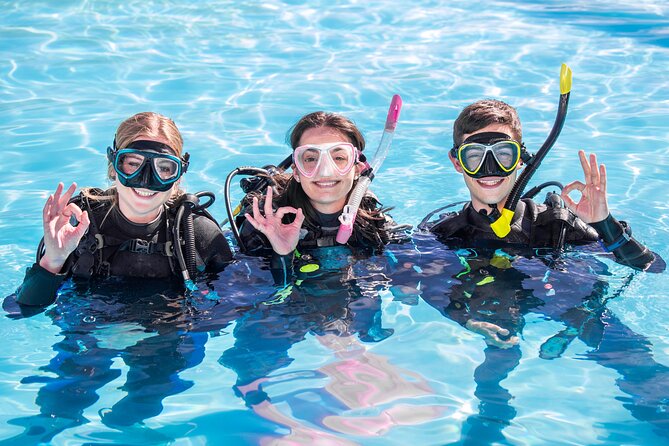
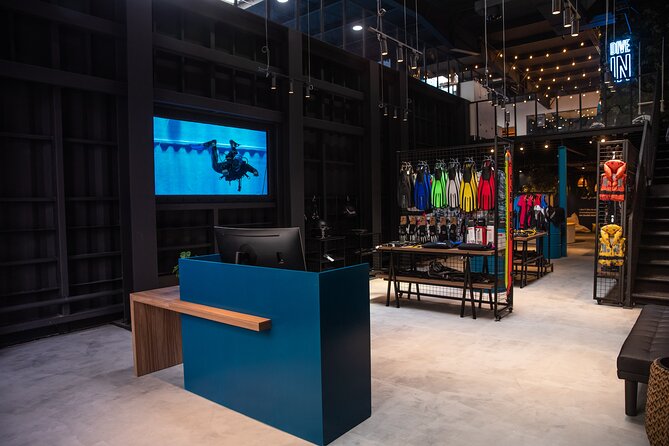
Dubai makes your first scuba certification feel manageable. DiveCampus runs its 3-day PADI Open Water course from a container-built indoor training setup, including a 4-metre deep, 220,000 litre water tank, so you practice skills close to the center even before you move into open water. The big win here is the 1:1 or 1:2 instructor ratio, which makes training feel focused instead of rushed.
I like the way the instructors are described as calm, patient, and genuinely invested, with standout names like Sara, plus Ahmed, Bonnie, Eslam, and Aziz popping up in comments. The center also gets praised for being clean, well kept, and for keeping you in the loop with reminders, so you are not guessing what comes next. One possible drawback is that the PADI e-learning portion (included in the course) is non-refundable, so you’ll want to start it only when you are ready to commit.
In This Review
- Key highlights before you book
- Why Dubai makes PADI Open Water feel easier
- DiveCampus meeting point and what the center is like
- Your 3-day PADI Open Water schedule, what happens each day
- Day 1: Confined-water training (skills focus)
- Day 2: More confined-water, then start open-water training
- Day 3: Open-water sessions to finish the certification path
- Confined-water sessions day 1 and day 2: how they build real confidence
- Open-water sessions day 2 and day 3, up to 18 meters
- Safety culture and the instructor attention that beginners feel
- PADI e-learning: the part people forget to plan
- Price and value: is $406 all-inclusive a smart buy?
- What to bring, and how to stay calm when you feel nervous
- Should you book this 3-day PADI Open Water course at DiveCampus?
- FAQ
- Where is the meeting point for the PADI Open Water course?
- What certification does this course lead to?
- Do I need to complete PADI e-learning, and can it be refunded?
- How many confined-water training sessions are included?
- How many open-water training sessions happen during the course?
- What instructor-to-student ratio is used during training?
- What happens if the weather is poor?
Key highlights before you book
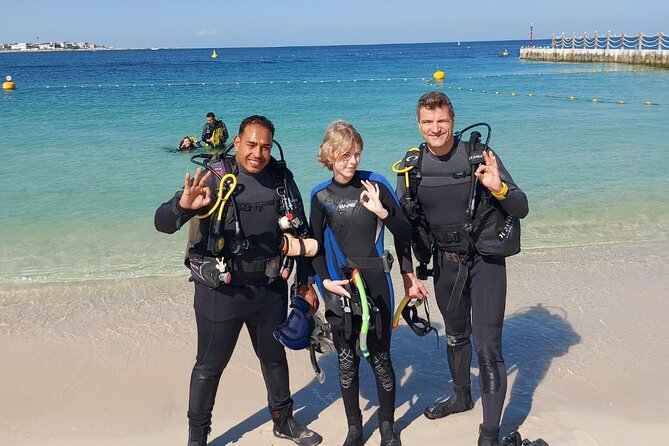
- 220,000 litres indoor practice water in a 4-metre deep container-built tank, built for repeat training sessions
- 1:1 or 1:2 instructor-to-student ratio, which is a big safety and confidence booster for beginners
- PADI e-learning included, but the e-learning cost is non-refundable, so plan timing carefully
- A true 3-day Open Water path, with confined-water training on days 1 and 2, then open-water sessions across days 2 and 3
- Frequent praise for instruction style, including names like Sara, Ahmed, Bonnie, Eslam, and Aziz
Other Dubai dive sites we got in the water at
- From Dubai: Snorkeling Trip to Dibba Al-Fujairah
★ 4.5 · 503 reviews - Discover Scuba Diving in Dubai
★ 4.6 · 494 reviews - From Dubai: Fujairah Snorkeling with Turtles, Transfer & BBQ
★ 4.6 · 406 reviews - 3-Day PADI Open Water Diving Course in Dubai
★ 5.0 · 173 reviews
Why Dubai makes PADI Open Water feel easier
Dubai is a practical place to learn scuba skills because the water temperatures are described as perfect all year round. That matters more than people think. When you are not fighting cold, it is easier to concentrate on breathing control, buoyancy, and confidence.
The course itself is designed around the standard PADI Open Water progression, where you end up with skills needed to go to 18 meters under the program limits. You also get the structure of three days of training, with in-water sessions that are flexible, as long as you pre-book your slots.
One more smart angle: Dubai has a well-known expat training scene, and DiveCampus is set up like a training hub, not just a storefront. That shows in how the center talks about safety and how they run instructor time.
DiveCampus meeting point and what the center is like
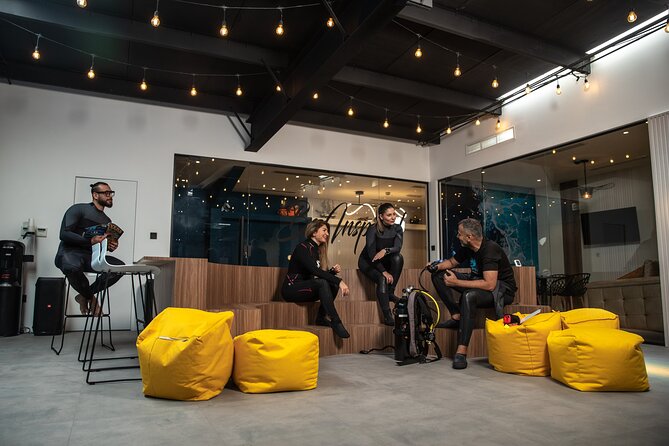
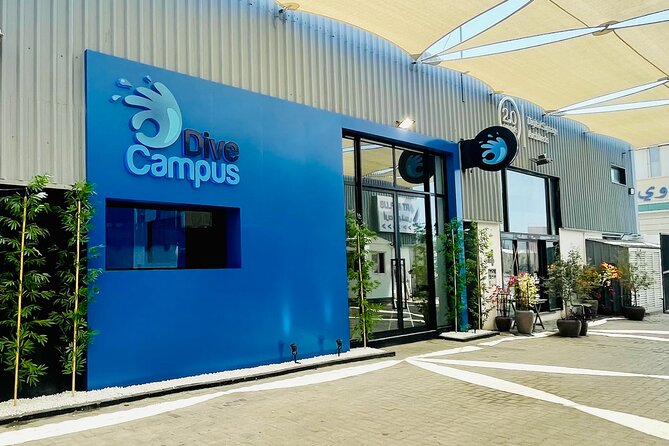
Your course starts at DiveCampus Diving Club, a PADI 5 Star Instructor Development Center, in Al Quoz (Unit 3 – 23 Street 14B). It is an indoor setup with an on-site tank, plus shore, boat, and aquarium-style training options mentioned as part of what they run.
In practical terms, that means your first days can feel less chaotic. You do not have to scramble to find a pool, then scramble again for open water. Instead, the center is set up to handle the early steps on their turf, then coordinate the next stage outdoors.
It is also described as near public transportation, with opening hours daily from 9:00 AM to 9:00 PM. If you like having time buffers, that flexibility helps. Your activity is private, meaning only your group participates, which typically means less waiting around with strangers.
Your 3-day PADI Open Water schedule, what happens each day
Think of this course as two phases, confined-water work first, then open-water experience. The program is built around what PADI requires for certification: PADI e-learning, then a specific number of training sessions in controlled conditions and in open water.
Here is the practical flow you should expect:
Day 1: Confined-water training (skills focus)
You complete the first day of confined-water training sessions. This is where you build core control, from equipment basics to staying calm while practicing the techniques you will use later in open water.
Because this is the first water time, it is also where you notice the instructor style most clearly. In real beginner courses, this is where people either relax or spiral. DiveCampus gets repeated praise for being patient and professional, which should help you get through the nerves stage.
Day 2: More confined-water, then start open-water training
Day 2 includes two parts: more confined-water training and then open-water sessions. The key is that you get repeated chances to practice the same skills before you are expected to apply them in more open conditions.
PADI requires a mix of confined-water training and open-water training for the Open Water level, and Day 2 is where the bridge happens. If your first water day is a confidence builder, Day 2 is your application day.
Day 3: Open-water sessions to finish the certification path
Day 3 is open-water training to wrap up the required sessions. By then, you usually know your equipment rhythm, you have your breathing patterns, and you understand what the instructor is likely to ask for.
It is also common for beginners to feel a little more “ready” on the third day, even if they were nervous on day 1. The goal is not just to finish, but to leave with the skills to keep learning safely.
- Dubai: Burj Khalifa Levels 124 & 125 Entry Ticket + Options★ 4.3 · 90,891 reviews
- Dubai: Desert Safari, Quad Bike, Camel Ride & Al Khayma Camp★ 4.9 · 68,962 reviews
- Dubai: Desert Safari, Quad Bike, Camel Ride and Sandboarding★ 4.9 · 43,505 reviews
- Dubai: Safari, Quad Bike, Camel Ride, and Buffet Dinner★ 4.9 · 33,424 reviews
- Dubai: Red Dune Safari, Quad Bike, Camel Ride, BBQ Dinner★ 4.9 · 32,185 reviews
Confined-water sessions day 1 and day 2: how they build real confidence
Confined water training is where you learn scuba basics without the pressure of big open-water variables. The center’s indoor setup is a big reason this stage can feel smoother. You are practicing where conditions are controlled, in a tank that is large enough to do real work, not just paddling around.
This stage matters because it teaches you what “good form” looks like underwater. That includes staying stable, moving safely, and handling small moments without panicking. Several course accounts mention that instructors were supportive when learners felt nervous, and that fits the confined-water phase perfectly.
The confined-water part also tends to reveal your learning style quickly. Some people need repeated demonstrations. Others need slower pacing. The center highlights a 1:1 or 1:2 ratio, which is a big deal for giving you attention on the specific skills you struggle with.
If you are worried about your comfort level in the water, treat this phase like your rehearsal time. The entire design of a PADI Open Water course is built to get you there step by step.
Open-water sessions day 2 and day 3, up to 18 meters
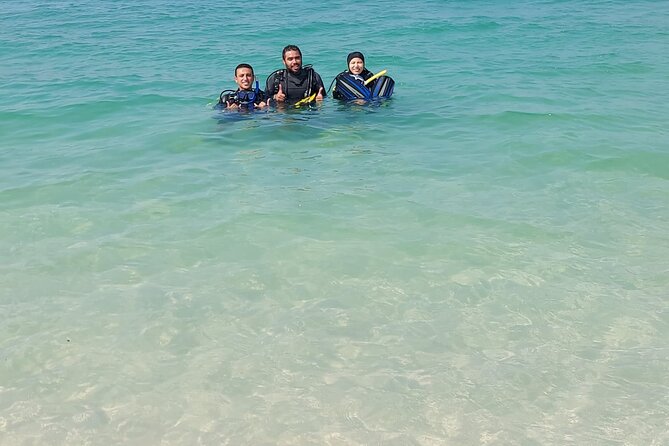
Open water is where your training becomes real. This is the stage where you apply confined-water skills to less predictable conditions, while instructors guide you through safe progression.
The program targets an Open Water certification that allows you to go to 18 meters. Your instructor will help you translate classroom and tank practice into underwater awareness, like spatial orientation and staying relaxed while adapting to open conditions.
One practical consideration is that open-water days depend on weather, and the activity notes that good weather is required. If conditions are not right, they offer a different date or a full refund, so your planning should stay flexible.
You can also benefit from how the center operates as a training club, with consistent communication style. Course comments often mention reminders and time-appropriate updates. That matters on open-water days, because it reduces uncertainty before you get in the water.
Safety culture and the instructor attention that beginners feel
This is the section that makes or breaks a first certification course. DiveCampus emphasizes quality and safety as a core principle, and it specifically runs with 1:1 or 1:2 instructor to student ratios.
Why that matters: in small-ratio training, you spend more time getting feedback and less time waiting. Feedback is what changes your buoyancy control, your equipment checks, and your confidence underwater.
The instruction style also gets repeatedly highlighted through specific names in comments. Sara is mentioned with praise for skill and teaching. Ahmed and Bonnie show up with dedication and expertise. Eslam and Aziz are also named by people who felt supported throughout.
Cleanliness and reminders also get consistent credit. You want a center where equipment and training space are maintained, because that reduces stress and makes learning smoother. And you want staff who keep you on schedule, since PADI training has several moving parts like e-learning, skill practice, and session timing.
PADI e-learning: the part people forget to plan
You will need to complete PADI e-learning as part of qualifying for the PADI International license. The course notes say you can complete it before you travel or between dives.
This is a great use of time if you like arriving prepared, but it is also where you should be careful. The e-learning cost is included (AED 388.5), and it is described as non-refundable. That means you should not treat it like a casual optional extra.
My practical advice is simple:
- Start e-learning soon after booking so you know how the platform feels to you.
- If you are tight on time, do a short test run on day one, then schedule the rest.
- Keep your dive training dates in mind so you complete e-learning before your water sessions pile up.
The upside is clear. If you do e-learning early, your in-water time can focus on skills rather than catching up on concepts.
Price and value: is $406 all-inclusive a smart buy?
At $406 per person for a 3-day PADI Open Water course, you are paying for an established training setup with instructor support and a structured certification path. The “all-inclusive” label signals that the package covers the core course components, and the program requirements also spell out what you must complete to qualify.
Where value really shows up is in two areas:
First, training attention. A 1:1 or 1:2 ratio is not cheap. If you have ever watched a big-group beginner class, you know how much slower and harder it can be when the instructor is split too thin.
Second, the indoor training tank setup. An on-site tank with large water volume built for repeat practice reduces the friction that often makes beginner courses drag. More time on training, less time on logistics.
The one value-related caution is the e-learning non-refundable note. That does not make the course bad, but it means you should commit to the timeline. If you are unsure you can fit it in, you might want to wait or be extra careful with your start date.
Overall, if you want a safe, structured Open Water course with strong staff attention, this price looks reasonable for Dubai and for the way DiveCampus describes its training approach.
What to bring, and how to stay calm when you feel nervous
You do not need to overthink this, but you should show up ready. Bring what your instructor asks for during confirmation, and arrive with a mindset of practice, not performance.
Here are the habits that usually make a first certification feel easier:
- Do your e-learning before water days start, so you are not learning concepts under stress.
- Plan for early session nerves. Confined-water training is designed for that exact moment.
- Ask questions immediately. Small clarifications save time underwater.
- If you feel panicky, say it. The center gets credit for handling nervous learners with patience.
Some comments even describe starting the course terrified and experiencing panic attacks, then being supported through it. That suggests the instructors are used to helping people manage fear, not just testing for who is most fearless.
Should you book this 3-day PADI Open Water course at DiveCampus?
I think this is a strong choice if you want a beginner-friendly Open Water path in Dubai with a small instructor-to-student ratio and a center that is built around training quality. The indoor tank setup makes the first phase of learning more controlled, and the repeated praise for friendly, professional instructors is exactly what you want when learning underwater skills for the first time.
You should also book if you value clear communication and reminders. That support reduces stress when scheduling is tight.
I would hesitate only if you are not sure you can complete the PADI e-learning portion in time, because it is described as non-refundable. If you can commit to the timeline, this course looks like a practical way to earn your Open Water certification without chaos.
FAQ
Where is the meeting point for the PADI Open Water course?
The course meets at DiveCampus Diving Club – PADI 5 Star (IDC) Scuba Dive Center at Indoor DiveTank, Shore, Boat & Aquarium Dives, Unit 3 – 23 Street 14B, Al Quoz, Dubai.
What certification does this course lead to?
This is a PADI Open Water course that teaches you skills to become a licensed diver, with training up to 18 meters deep.
Do I need to complete PADI e-learning, and can it be refunded?
Yes. You must complete PADI e-learning to qualify for the PADI International license. The e-learning is included at a cost of AED 388.5 and is noted as non-refundable.
How many confined-water training sessions are included?
To qualify for the license, you complete 5 confined water training sessions on day 1 and day 2.
How many open-water training sessions happen during the course?
You complete four open water training sessions across day 2 and day 3.
What instructor-to-student ratio is used during training?
DiveCampus states it uses a 1:1 or 1:2 instructor to student ratio for training.
What happens if the weather is poor?
The experience requires good weather. If it is canceled due to poor weather, you will be offered a different date or a full refund.
Reefs and Wrecks We Got Into



More of Dubai, written up the same way






Scuba Diving & Snorkeling, compared.
 ★ 4.5Snorkeling Trip to Dibba Al-FujairahFrom $111503 reviews
 ★ 4.6Discover Scuba Diving in DubaiFrom $95494 reviews
 ★ 4.6Yacht Cruise with Swimming, Snorkeling and BBQ LunchFrom $87438 reviews
 ★ 4.6Fujairah Snorkeling with Turtles, Transfer & BBQFrom $135406 reviews
 ★ 4.7Fujairah Half-Day Scuba Dive and SnorkelingFrom $157186 reviews
 ★ 5.03-Day PADI Open Water Diving Course in DubaiFrom $354173 reviews
 ★ 4.7The Lost Chambers Aquarium Snorkeling ExperienceFrom $121159 reviews
★ 5.0Discover Scuba Diving in DubaiFrom $101116 reviews
Browse the lists this tour appears in