
REVIEW · DUBAI
Dubai City Tour Old Town, Abra Taxi Boat, Gold & Spice Market
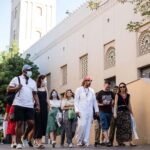
Old Dubai is waiting, one creek crossing away. This 2 to 3 hour Old Town route strings together Al Seef, the Bastakia lanes, a classic Abra boat ride, and the spice and gold souks into one easy loop. I like that it’s built around walking plus water views, not a bus tour where you barely see anything.
I especially love the small groups (max 15) and the licensed, multilingual local guiding. In one standout experience, Francis was praised for making the history feel clear and for helping everyone prep for the gold and spice shopping stops. A realistic drawback to consider is reliability, since there has been at least one reported issue with representatives not showing up at the meeting point on time, so I recommend double-checking details day-of.
In This Review
- Key highlights worth your time
- Dubai Old Town by creek, souks, and a short boat ride
- Your start at Al Shindagha Museum, your end at Gold Souk
- Al Seef: waterfront promenade, heritage street, and snack time
- Bastakia Quarter and Al Fahidi wind towers, carved doors, and wooden lattices
- Abra crossings at Dubai Creek, and what you can spot from the water
- Textile Old Souk and Dubai Spice Souk, where smells and materials pull you in
- Dubai Museum and Al Fahidi Fort, then the Gold Souk finish
- Price and value: why $29 can work for a short Dubai day
- Who should book this Dubai Old Town route, and who might skip it
- Should you book this Dubai City Tour Old Town, Abra Taxi Boat, Gold and Spice Market?
- FAQ
- How long is the Dubai Old Town, Abra taxi boat, Gold and Spice market tour?
- How much does the tour cost?
- Where does the tour start and end?
- Is this tour all walking or does it include a boat ride?
- What are the major stops included?
- How big are the groups?
- Is free cancellation available?
Key highlights worth your time
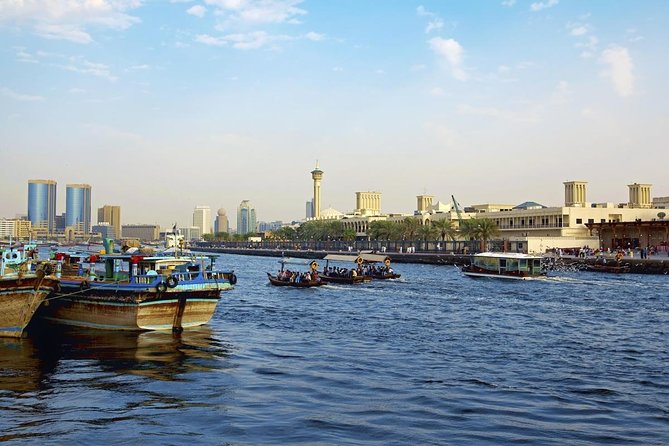
- Abra boat ride on Dubai Creek gives you a classic perspective fast, without needing a full-day plan
- Al Seef heritage area mixes old port stories with a practical stop for street food
- Bastakia Quarter wind towers and carved wooden doors make the architecture feel personal and real
- Textile Old Souk lanes are the kind of maze where you can still spot fabric and craft details
- Gold and Spice Souks finish strong with photo chances and serious shopping energy
Deeper into the old side of the creek
- Dubai: Old Town, Creek, Museums, Souks, & Street Food Tour
★ 4.8 · 10,816 reviews - Dubai: Old Town, Souks, Street Food, Guided Tour & Abra Ride
★ 4.9 · 7,170 reviews - Dubai: Frame Tickets, Creek, Souks & Blue Mosque Guided Tour
★ 4.8 · 5,980 reviews - Dubai Aladdin Tour: Souks, Creek, Old Dubai and Tastings
★ 5.0 · 3,755 reviews
Dubai Old Town by creek, souks, and a short boat ride
This tour works because it matches how Old Dubai feels. You start with waterfront heritage around Al Seef, then shift into the low-rise lanes of Al Fahidi and Bastakia, where wind towers and older building styles do the talking. Then you move to the water, because Dubai Creek is the spine of the city’s traditional trade.
The best part is that the pace is short and focused. Each segment is timed so you get variety without burning half a day. That matters in Dubai, where indoor air-conditioning can be great, but you also want outdoor, street-level context while you’re there.
I also like that the tour gives you multiple “texture” moments, not just landmarks. You’ll be near the creek with cargo ships and birds in view, and you’ll also step into market alleys where fabrics, spices, and gold are the main characters. For many visitors, it’s the difference between seeing Dubai and understanding how it used to function.
Your start at Al Shindagha Museum, your end at Gold Souk
You meet at Al Shindagha Museum, 288 – Al Fahidi. That’s a smart place to start because it puts you right near the older districts the route is aiming to show. The tour ends at the Dubai Gold Souk area (Deira – Al Ras – Dubai – Al Ras), which is convenient if you want to keep shopping afterward or grab a bite nearby.
Timing is listed as 2 to 3 hours, and many stops include admission tickets. Translation: you’re not just walking by things from the outside. You should expect quick entries and short guided moments rather than long museum hours.
One practical note: because the finish point is the Gold Souk zone, it’s easier to plan your day around it. If you have an evening plan, try not to schedule it too far away until you see how long the market time feels for your group.
Al Seef: waterfront promenade, heritage street, and snack time
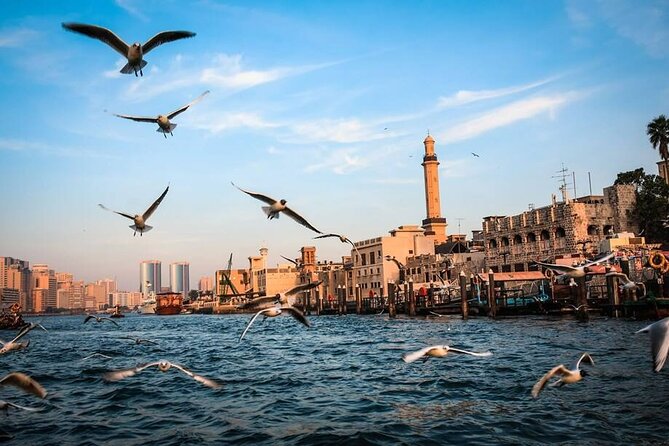
Your first main stop is Al Seef, along Dubai Creek. This is one of those places where old and new sit next to each other in the same frame. You get the heritage side with older souk vibes and also the modern zone lined with hotels, malls, and restaurants.
You’ll hear the core idea quickly: this area connects to the Gulf’s beginnings as a pearl diving port. That theme matters because it explains why the creek mattered so much for Dubai’s economy before high-rises took over the skyline.
The tour also highlights an open-air market atmosphere and a heritage-style souk street. Even if you skip shopping, you’ll want to pause for the street-food energy. It’s an easy way to get oriented in the district before the route narrows into older lanes.
If you’re the type who likes photos, Al Seef gives you waterfront backdrops and architecture contrast, especially when you’re walking along the shoreline.
Bastakia Quarter and Al Fahidi wind towers, carved doors, and wooden lattices
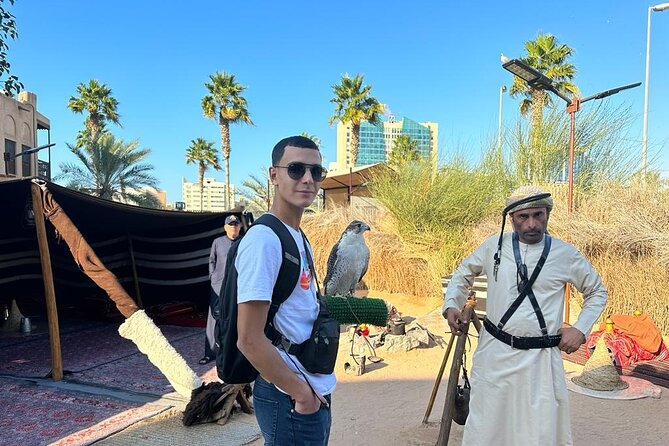
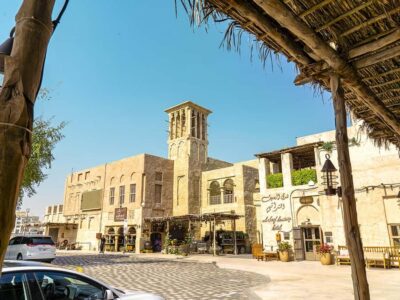
Next you head into Bastakia Quarter, also known through the Al Fahidi Historical Neighbourhood area. This is where Old Dubai turns from a concept into a set of details you can see with your own eyes.
The point of interest here is the architecture. Bastakia gets its name from Bastak in Iran, linked to original textile and pearl traders. You’ll notice that influence in the construction and design choices, especially the wind towers and the carved wooden doors with wooden lattices. These features were practical for cooling and comfort, but they also give the neighborhood its character.
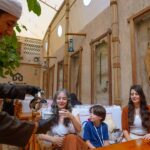
This is also where your walking becomes more than sightseeing. The narrow, winding lanes make the streets feel lived-in and slow down your pace naturally. You’ll get that “wait, this is real” feeling, because the buildings are built to be viewed close-up, not from across a highway.
A small consideration: since the lanes can be tight, comfortable shoes help. If you don’t love crowds, go in with a patient mindset, since markets and heritage areas can draw attention.
Abra crossings at Dubai Creek, and what you can spot from the water
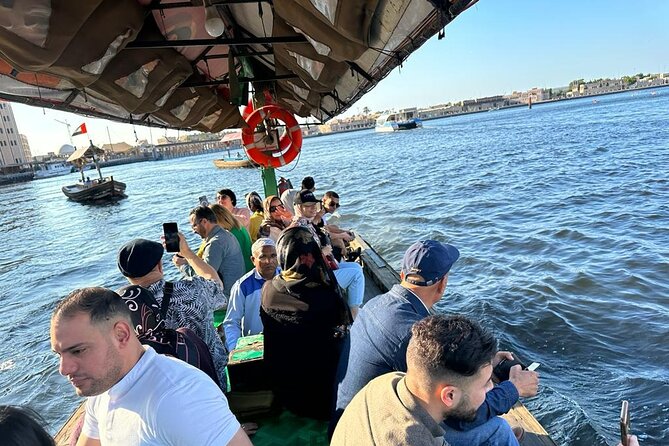
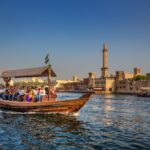
At Bur Dubai Abra Station, you switch from walking to the city’s most traditional water transport: the Abra. This is a wooden water taxi that’s been used for centuries, and it still functions as a daily connector across the creek.
The word Abra comes from the Arabic verb abara, meaning to cross. That’s a simple definition, but it makes the ride feel more meaningful. It’s not just a photo stop, it’s a transport method.
You’ll ride in a short window, so you get the impact without committing to a longer boat day. From the water, you can watch the banks come closer and see everyday creek activity, including birds, cargo ships, and restaurants along the shore.
For me, the Abra ride is the tour’s “why Dubai works” moment. It shows how trade and movement shaped the city. And because you’re on the water, you also get a break from standing in market aisles.
One more practical tip: when you’re booking your day, don’t plan your next activity to start exactly at the end time. Between boarding, loading, and the general flow of the area, you’ll feel the rhythm of the creek.
Textile Old Souk and Dubai Spice Souk, where smells and materials pull you in
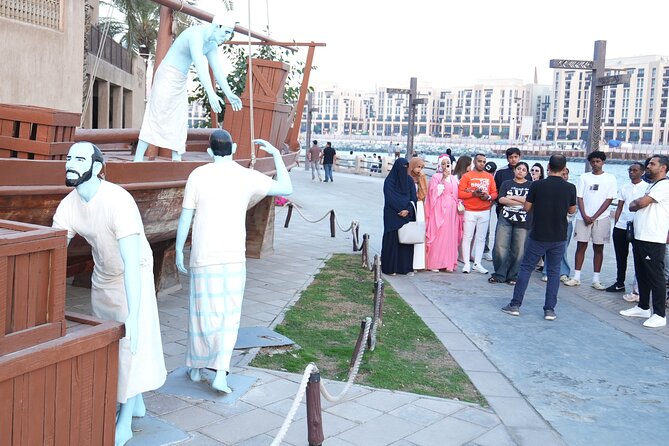
Then you move into the market world. First comes the Old Souk in Bur Dubai, described as the textile souk. The “labyrinthine layout” is part of the experience. You enter and quickly understand why this kind of market makes sense: narrow passages, stalls close together, and plenty of visual detail to keep you interested.
A standout detail here is the structure and feel of the lanes. You’ll spot a large wooden beam and sand-colored walls, plus a wooden roof in the traditional setting. It’s the kind of environment where you can look up and realize you’re in a different time period than the city outside.
You can also shop for things like hand-woven and machine-made fabrics. The tour framing makes a key point for value-minded shoppers: these types of textiles may be harder to find elsewhere in the city.
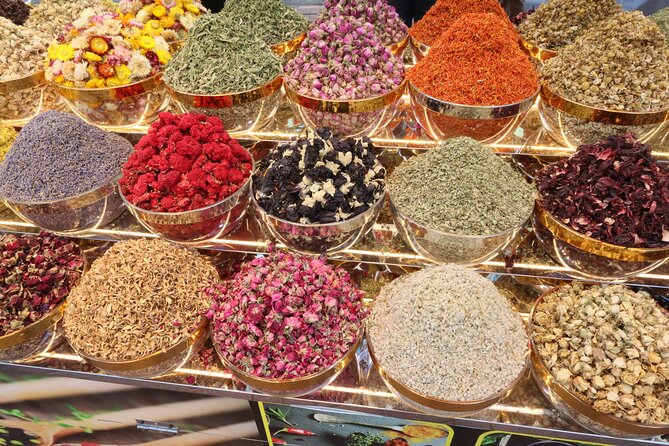
From there, you head toward Deira’s Spice Souk, located around Al Ras on Baniyas Street, adjacent to the Gold Souk zone. Spice markets are sensory, and this one is built for that. You’ll see stalls selling spice products, and you’ll get the classic market layout where the smell guides you faster than any map.
If you enjoy buying small souvenirs, this stop is practical. It’s easier to pick something compact, especially if you’re not ready to commit to jewelry prices at the Gold Souk.
Other sightseeing loops around Dubai
- Dubai: City Sightseeing HOHO Bus Tour + Sunset & Night Tour★ 4.3 · 6,442 reviews
- Dubai Old and Modern City Tour with Blue Mosque Visit★ 5.0 · 3,624 reviews
- Small Group Abu Dhabi City and Sightseeing Tour From Dubai★ 5.0 · 3,331 reviews
- Dubai: Big Bus Hop-On Hop-Off Tour & Optional Dhow Cruise★ 4.4 · 3,288 reviews
- Abu Dhabi Premium Full-Day Sightseeing Tour From Dubai★ 5.0 · 3,277 reviews
Dubai Museum and Al Fahidi Fort, then the Gold Souk finish
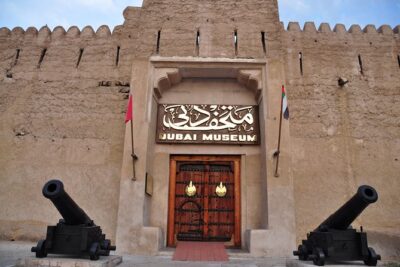
Back in the Al Fahidi area, you also get Dubai Museum and Al Fahidi Fort time. The tour notes that the oldest building dates back to the 1780s, which helps ground everything else you’ve seen. Market vibes are fun, but the museum connection is what ties the architecture and neighborhood lanes to a clearer timeline.
This stop is shorter, so don’t expect a full deep-study museum day. Instead, think of it as a quick anchor point. After walking among wind towers and traditional doors, you’ll understand what you’re looking at a bit more.
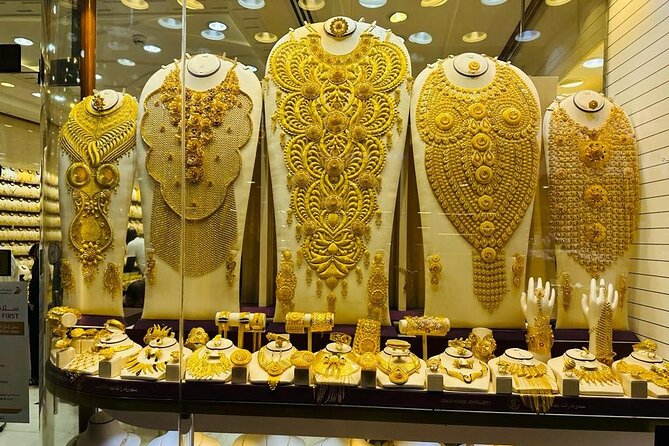
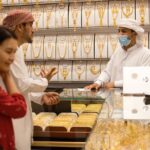
Finally, you end at the Dubai Gold Souk, where you enter the gold market shops and see the variety of jewelry and precious stones. This is where the tour shifts from learning into choosing. If you want to buy, the Gold Souk is the logical end, since you’ll have guidance to help you navigate your first pass.
A key detail for your mindset: gold shopping can be a lot. If you don’t plan to buy, you can still enjoy it as a cultural shopping street. If you do plan to buy, give yourself time to compare and decide what matters most to you before you commit.
Price and value: why $29 can work for a short Dubai day
The price is listed at $29 per person for about 2 to 3 hours, with a mobile ticket. On paper, that seems like a low cost for multiple highlights. In practice, the value comes from three things you typically don’t get together in one tight block:
- Guided walking across multiple old districts (not just one area)
- A creek boat ride (Abra) included in the flow of the day
- Admission tickets noted as included at several stops
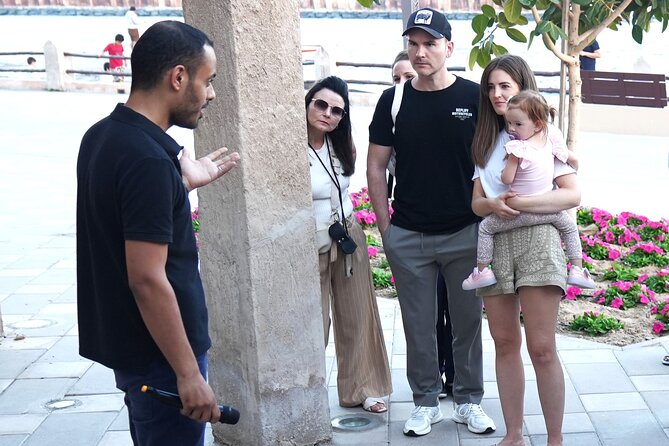
You also get the advantage of small group size (maximum 15). That means your guide can actually talk to you, not just talk at the group. And since the guides are described as licensed and able to work in different languages, you’re less likely to lose the story when you’re standing in front of an old fort or a wind tower.
Is $29 a bargain? It can feel like one, especially if you would otherwise pay separate entry fees and waste time figuring out how to connect the districts. If you’re the kind of traveler who loves slow independent exploring, you might prefer spending longer on fewer areas. But for a first-time Old Dubai hit, the structure makes sense.
Who should book this Dubai Old Town route, and who might skip it
This tour is ideal if you:
- Have a short trip and want Old Dubai, not just skyscrapers
- Like a mix of heritage lanes, markets, and a creek boat ride
- Want guided help understanding where to look in the souks
You might skip it if you:
- Want hours inside museums or a long deep-market shopping session
- Feel uncomfortable in crowded market passages, since souk areas naturally attract people
If your group includes different interests, this route also balances well: architecture and museums for the story people, and materials like textiles, spices, and gold for the shopping people.
Should you book this Dubai City Tour Old Town, Abra Taxi Boat, Gold and Spice Market?
I’d book it if you want a smart, guided “first taste” of Old Dubai in a manageable 2 to 3 hour window. The Abra ride, the Bastakia wind-tower streets, and the market sequence ending at the Gold Souk create a clean arc to your day.
Just do one thing to protect your experience: confirm the meeting details and timing for Al Shindagha Museum the day you go. There’s at least one reported case of a guide representative issue at the meeting point, and that’s the kind of problem you can avoid with a quick day-of check.
FAQ
How long is the Dubai Old Town, Abra taxi boat, Gold and Spice market tour?
It’s listed as about 2 to 3 hours.
How much does the tour cost?
The price is $29.00 per person.
Where does the tour start and end?
It starts at Al Shindagha Museum, 288 – Al Fahidi, Dubai, and ends at the Dubai Gold Souk area in Deira – Al Ras.
Is this tour all walking or does it include a boat ride?
It includes a small wooden Abra boat ride across Dubai Creek, plus walking through old neighborhoods and souks.
What are the major stops included?
You’ll visit Al Seef, Al Fahidi Historical Neighbourhood/Bastakia Quarter, Dubai Creek, Old Souk, Dubai Museum and Al Fahidi Fort, Dubai Spice Souk, and Dubai Gold Souk.
How big are the groups?
The maximum group size is 15 travelers.
Is free cancellation available?
Yes. You can cancel up to 24 hours in advance for a full refund.
Sightseeing Circuits We Repeated


The Creek, the Souks, the Old Side


More of Dubai, written up the same way


Old Dubai, Creek & Souks, compared.
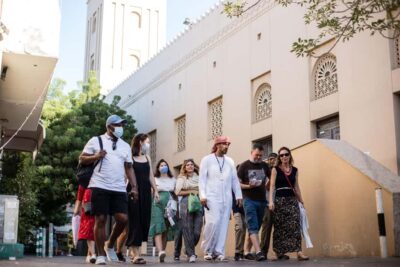 ★ 4.8Old Town, Creek, Museums, Souks, & Street Food TourFrom $1810,816 reviews
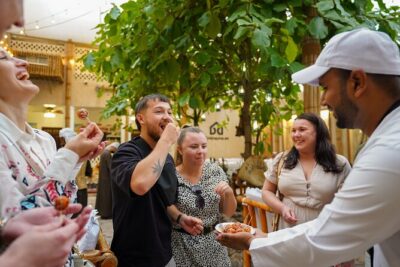 ★ 4.9Old Town, Souks, Street Food, Guided Tour & Abra RideFrom $97,170 reviews
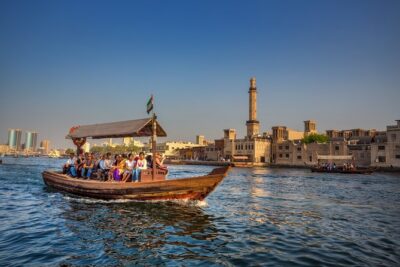 ★ 4.8Frame Tickets, Creek, Souks & Blue Mosque Guided TourFrom $495,980 reviews
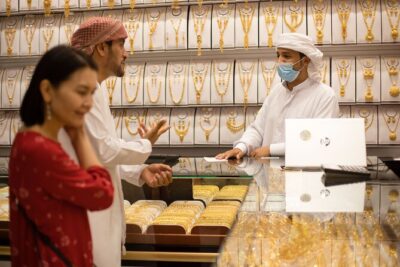 ★ 5.0Dubai Aladdin Tour: Souks, Creek, Old Dubai and TastingsFrom $213,755 reviews
 ★ 4.8Half-Day City Tour with Blue Mosque, Creek, and SouksFrom $493,059 reviews
 ★ 4.0Dubai Half-Day City Tour with Visit to Dubai Gold SoukFrom $161,741 reviews
★ 5.0Old Town, Souks, Street Food, Guided Tour & Abra RideFrom $171,664 reviews
 ★ 4.9Old Town, Street Food, Creek, Souks, & Emirati HouseFrom $61,496 reviews
Browse the lists this tour appears in