
REVIEW · DUBAI
Dubai: Cultural Lunch at The Sheikh Mohammed Center
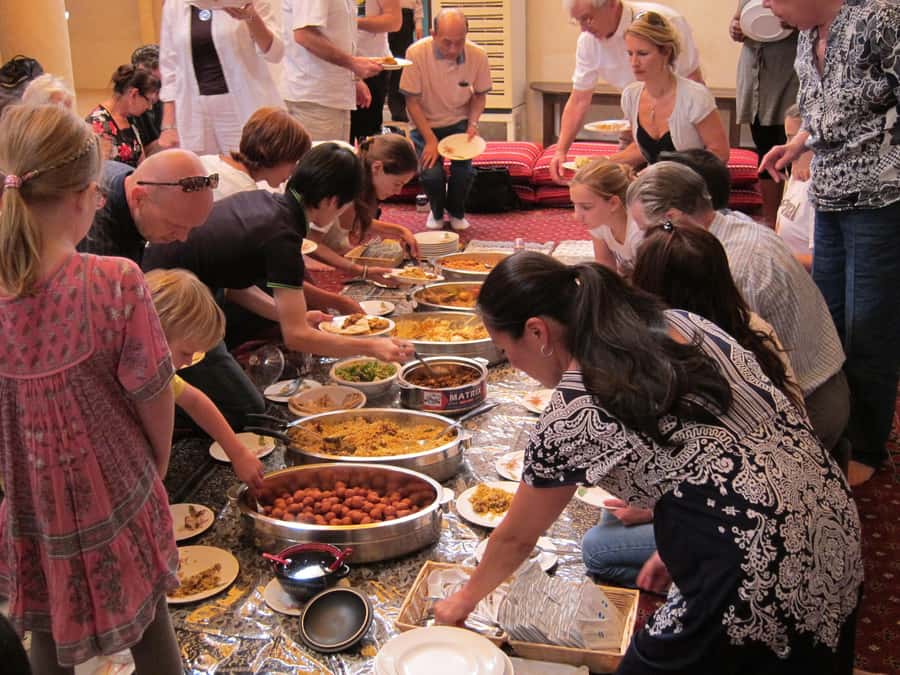
Arabic hospitality can be surprisingly practical. This 1.5-hour cultural lunch at the Sheikh Mohammed Center for Cultural Understanding (SMCCU) uses the setting, the food, and a relaxed conversation to explain what daily life in Dubai feels like, and how people think about respect. I particularly love the wind-tower courtyard setting and the center’s Open Doors, Open Mind approach that turns cultural questions into real back-and-forth.
What I love next is the meal itself. You get an actual taste of Emirati food, plus Arabic coffee and dates, while a host (I’ve seen names like Khaled, Nasser, and Ms Ruqaya come up as guides) invites questions without making anything feel awkward. The one drawback to plan around is getting to the right door in Al Fahidi Historic District, where signage can be confusing and construction can shuffle walking routes, so give yourself a little extra time at check-in.
In This Review
- Key points to know before you go
- Dubai’s cultural shortcut: a lunch in Al Fahidi’s wind-tower house
- Where to find House 26, and how to avoid a small check-in hassle
- The 90-minute flow: what happens during the cultural lunch
- Emirati dishes, Arabic coffee and dates: the meal is the lesson
- The Q&A that makes the culture feel real
- How Islam shows up in everyday etiquette and values
- Inside Al Bastakiya trading village: why the courtyard matters
- Price and value: is $42 a smart use of time?
- Who this fits best (and who might want something else)
- Practical tips to get the most out of your lunch
- Should you book the SMCCU cultural lunch?
- FAQ
- How long is the Cultural Lunch at The Sheikh Mohammed Center?
- What does the $42 price include?
- Where is the meeting point?
- Is the host or greeter available in English?
- Can I ask questions during the lunch?
- What kind of food will I eat?
- Is it wheelchair accessible?
- What is the setting like?
- Can I cancel and get a full refund?
- Is there an option to reserve now and pay later?
Key points to know before you go
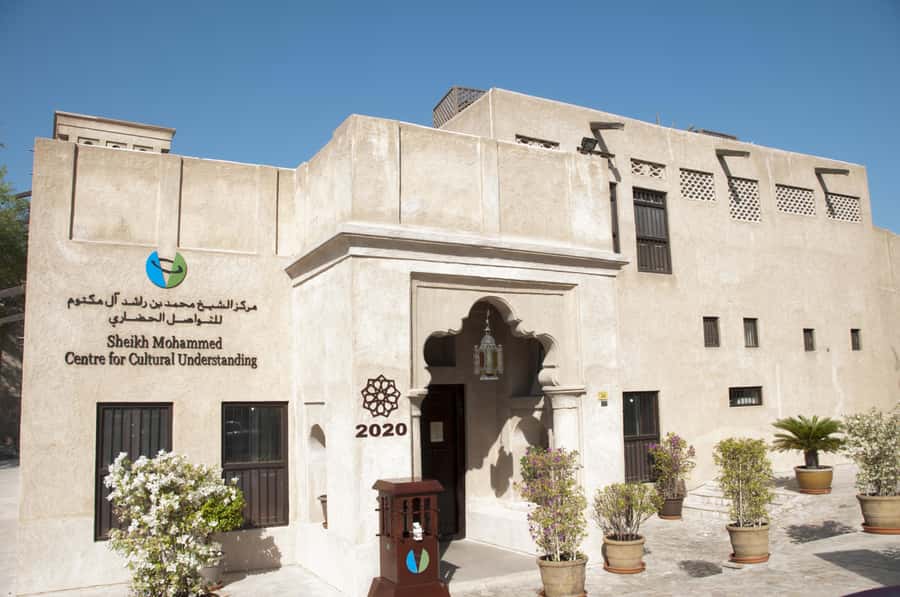
- Wind-tower house in Al Fahidi: You eat in a traditional structure in the Al Bastakiya trading village area.
- Emirati dishes plus Arabic coffee and dates: The lunch is built around food you can recognize and talk about.
- Ask anything style Q&A: Your host or hostess encourages questions, including ones that people might hesitate to ask elsewhere.
- A real cultural-sensitivity lesson: You learn how Islam influences local values and day-to-day etiquette.
- Comfortable courtyard seating: You sit on traditional floor cushions, which feels authentic, but plan for low seating.
- English hosts: Your host or greeter works in English.
Undecided? These are the other Dubai bookings we paid for.
- Dubai: Burj Khalifa Levels 124 & 125 Entry Ticket + Options
★ 4.3 · 90,891 reviews - Dubai: Desert Safari, Quad Bike, Camel Ride & Al Khayma Camp
★ 4.9 · 68,962 reviews - Dubai: Desert Safari, Quad Bike, Camel Ride and Sandboarding
★ 4.9 · 43,505 reviews - Dubai: Safari, Quad Bike, Camel Ride, and Buffet Dinner
★ 4.9 · 33,424 reviews
Dubai’s cultural shortcut: a lunch in Al Fahidi’s wind-tower house
Dubai can feel like a theme park unless you slow down. This experience gives you a grounded slice of local life because it’s centered on conversation and everyday culture, not sightseeing for photos.
The setting matters. The SMCCU is in a traditional wind tower house in the Al Bastakiya trading village area, inside the Al Fahidi Historic District. That alone changes the tone. You’re not just eating lunch in a restaurant. You’re inside a place built to handle heat with architecture that predates modern glass-and-steel cooling.
And then there’s the vibe: relaxed, open, and designed for cross-cultural understanding. The center’s Open Doors, Open Mind motto is more than branding. You’ll get prompted to ask questions about customs, expressions, and religion, and you’ll hear answers in a friendly way rather than a lecture.
Where to find House 26, and how to avoid a small check-in hassle
Your meeting point is House 26, Al Musallah Road, Al Fahidi Historic District, adjacent to the Ruler’s Court. In theory, that’s straightforward. In practice, Al Fahidi can be a little tricky because streets and pathways can shift due to construction.
Here’s how I’d play it safe. Arrive a bit early, scan for House 26, and don’t assume every doorway will look obvious from the street. If you’re walking in from a larger viewpoint, take a moment to confirm you’re on the correct house number before you commit to a direction.
A small practical tip: if you’re the type who likes a smooth start, this is one of those times. The meal and conversation run on a simple 1.5-hour timeline, so a rushed arrival usually turns into a rushed lunch, and that’s when people miss the early conversation prompts.
The 90-minute flow: what happens during the cultural lunch
The whole experience is about 1.5 hours. That’s long enough for food, questions, and a real rhythm, but short enough that you leave with clarity rather than information overload.
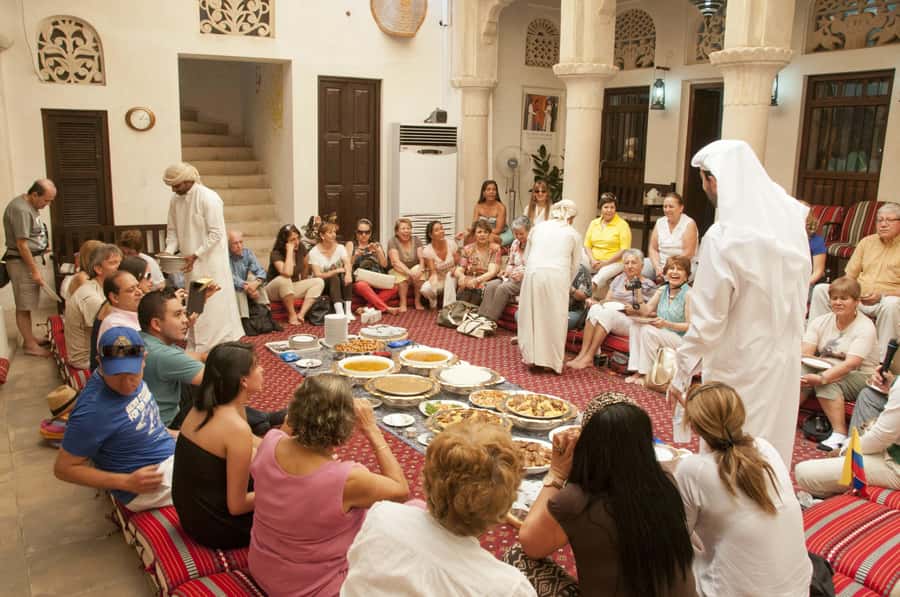
You typically start by settling into the SMCCU courtyard. Seating is on traditional floor cushions, which helps you feel the mood of the place. If you prefer a lot of upright comfort, bring a bit of patience, and consider whether you’re comfortable sitting low for the duration.
Then the conversation starts to take shape around daily life in the UAE. You’ll cover topics like greetings and expressions, plus how local values connect to Islam. This isn’t presented like a rulebook. It’s more like guided explanation with lots of room for follow-up questions.
At some point during the lunch, food becomes the anchor. You’ll be eating Emirati dishes while chatting with your host about what you’re seeing and eating and how it fits into everyday culture. The pacing is informal, so you don’t feel trapped in a formal presentation style.
Emirati dishes, Arabic coffee and dates: the meal is the lesson
Food here is not an afterthought. It’s part of how you learn.
You’ll taste traditional Emirati dishes as part of the lunch, along with Arabic coffee and dates. This combination is one of the most useful cultural entry points because it’s familiar and approachable, but it still carries meaning. Coffee and dates are often offered as a sign of hospitality, and the way people greet each other around food can tell you a lot about social expectations.
What’s especially valuable is the chance to connect tastes to explanations. Instead of just eating and moving on, you can ask what a dish represents, when it’s served, or what people consider normal. That turns your hunger into context.
Dessert is included too. So you get a complete lunch flow rather than a sample plate that leaves you craving real food afterward. And if you’re picky about strong surprises, this is still a safe bet compared with some “cultural food tours,” because you’re getting a structured selection that focuses on Emirati variety.
The Q&A that makes the culture feel real
Some cultural experiences tell you facts. This one helps you ask questions.
SMCCU encourages guests to ask your host or hostess any questions you like, following the center’s Open Doors, Open Mind approach. In practice, that means the talk can go in the direction that matters most to you.
I’ve noticed a pattern in the guide styles connected with this center, including hosts like Khaled, Nasser, and Ms Ruqaya. The best part of their approach is that they don’t just answer. They invite follow-ups, sometimes with humor, and they respond to the intent behind your question.
A question can sound simple, like why people greet a certain way. But the answers can branch into etiquette, religion-related sensitivities, and why certain topics are handled more carefully in local settings. That’s what makes this lunch more useful than a quick intro talk.
And because it’s over a meal, it feels natural. You can ask what you’re actually wondering in the moment, not what you pre-read in a brochure.
How Islam shows up in everyday etiquette and values
Religion in Dubai can feel complicated from the outside. You might see rules, clothing, or customs, but not always the “why” behind them.
At the SMCCU lunch, the cultural framework includes the impact of Islam on local values and sensitivities. You’ll learn how local people think about respect and what tends to be appropriate in conversation and public life.
This matters because Dubai is a mix of cultures, and visitors can accidentally step into cultural misunderstandings without realizing it. A basic grounding in etiquette changes how you move through the city. You notice more. You guess less. You adapt faster.
The format helps, too. Instead of being told what not to do, you’re guided through what people value. That approach makes it easier to remember and easier to apply.
- Dubai: Red Dune Safari, Quad Bike, Camel Ride, BBQ Dinner★ 4.9 · 32,185 reviews
- Dubai: Premium Safari, Camel Ride & Al Khayma Camp 3-Buffets★ 4.9 · 30,335 reviews
- Dubai: Burj Khalifa Sky Level 148, 124, & 125 Entry Ticket★ 4.6 · 23,827 reviews
- Dubai Red Dunes ATV, Camels, Stargazing & 5* BBQ Al Khayma Camp★ 5.0 · 21,620 reviews
- Dubai Marina: Luxury Yacht Tour with Breakfast or BBQ Option★ 4.7 · 21,528 reviews
Inside Al Bastakiya trading village: why the courtyard matters
The Al Bastakiya trading village area is one of the best places to slow down in Dubai, because it keeps a sense of place that modern districts don’t. The SMCCU’s location inside this historic district adds to the realism of the experience.
Sitting in the SMCCU courtyard on traditional floor cushions makes the whole thing feel closer to daily life. It’s harder to treat the conversation like a performance when you’re literally sitting in a traditional space.
The wind tower house setting also gives a subtle lesson in the genius of older design. You can see how architecture shaped living. Even if you don’t get a deep engineering lecture, you feel that the place was built for the climate, and it makes the cultural discussion feel less abstract.
Price and value: is $42 a smart use of time?
At $42 per person, this isn’t a budget snack. But for what you get, it’s also not overpriced.
You’re paying for three things that are hard to replicate on your own:
- A guided lunch with a host who actively answers questions in English.
- A structured selection of Emirati dishes plus Arabic coffee and dates.
- A cultural context lesson focused on daily life, etiquette, and religion-linked sensitivities.
If you’ve ever spent money on a generic “Dubai orientation” that didn’t answer your real questions, you’ll understand why this format can be worth it. You’re not just buying food. You’re buying conversation time with someone trained to explain culture in a calm, nonjudgmental way.
Also consider timing. If you do this early in your trip, it can improve how you interpret everything else you see afterward. You’ll have a better sense of what to ask, what to notice, and how to behave respectfully without overthinking.
Who this fits best (and who might want something else)
This experience is a great fit if you want:
- A first meaningful look at Emirati culture without needing to research beforehand
- Conversation-friendly learning, especially if you enjoy asking questions
- A meal that’s part of the cultural education rather than just a pause in sightseeing
It also suits people who want an authentic side of Dubai that feels human-scale. The setting, the relaxed Q&A, and the focus on everyday life make it easier to connect than with high-volume tours.
If you’re the type who wants big-ticket sights, skyline views, or hands-on activities, you might find this more subtle than you expected. It’s about understanding and etiquette as much as about food. Think “conversation and context,” not “action packed.”
Practical tips to get the most out of your lunch
First, show up with one or two questions you genuinely want answered. Even simple topics like greetings, common expressions, or what everyday hospitality means can turn into a great discussion once your host starts explaining the background.
Second, be prepared to sit low. Traditional floor cushions are part of the authentic feel. If you have mobility limits, consider your comfort level with the seating style, even though the experience is described as wheelchair accessible.
Third, pace your expectations. With only 1.5 hours, the best results come when you stay present. Don’t try to multitask or turn it into a checklist. If you let the conversation flow, you’ll likely get more out of it than you expected.
Finally, give yourself extra arrival time for Al Fahidi. Al Musallah Road and House 26 are easy to miss if construction has altered the usual walking paths. When you’re relaxed on arrival, the whole lunch feels smoother.
Should you book the SMCCU cultural lunch?
I’d book it if you’re in Dubai and you want your first real insight to be grounded in daily life. The combination of traditional Emirati dishes, Arabic coffee and dates, and an English host who encourages questions makes this a high-clarity experience.
It’s also a strong choice if you value respectful conversation. The center is set up for cross-cultural understanding, and the tone is designed to make questions feel welcome, not risky or embarrassing.
If you want major attractions and don’t care about etiquette or cultural context, you can skip this. But if you want to understand Dubai beyond its visuals, this lunch is one of the best time-to-meaning ratios in the city.
FAQ
How long is the Cultural Lunch at The Sheikh Mohammed Center?
The experience lasts 1.5 hours.
What does the $42 price include?
The lunch includes a selection of local Emirati dishes, Arabic coffee and tea, and dates.
Where is the meeting point?
The meeting point is House 26, Al Musallah Road, Al Fahidi Historic District, adjacent to the Ruler’s Court.
Is the host or greeter available in English?
Yes. The host or greeter is listed as English, and the experience language is English.
Can I ask questions during the lunch?
Yes. You can ask your host or hostess any questions you like in the informal, relaxed atmosphere.
What kind of food will I eat?
You’ll sample traditional Emirati dishes, along with Arabic coffee, tea, dates, and dessert.
Is it wheelchair accessible?
Yes, the experience is listed as wheelchair accessible.
What is the setting like?
Lunch is held in the courtyard of the SMCCU in a traditional wind tower house, with seating on traditional floor cushions.
Can I cancel and get a full refund?
Free cancellation is available up to 24 hours in advance for a full refund.
Is there an option to reserve now and pay later?
Yes. You can reserve now and pay later, with no payment due today.
More of Dubai, written up the same way




Lunch Experiences, compared.
 ★ 5.0Abu Dhabi Trip with Lunch at Al Khayma Heritage RestaurantFrom $127805 reviews
 ★ 4.6Yacht Cruise with Swimming, Snorkeling and BBQ LunchFrom $87438 reviews
 ★ 4.3Explore Dubai with Optional LunchFrom $48400 reviews
 ★ 5.0Abu Dhabi City Tour From Dubai With LunchFrom $87307 reviews
 ★ 4.3Complete Day Tour with Optional LunchFrom $60204 reviews
 ★ 5.0Private Half Day Modern Dubai City tour with LunchFrom $150172 reviews
 ★ 4.5Al Ain Full Day Trip from Abu Dhabi with LunchFrom $270136 reviews
 ★ 5.0Full-day Abu Dhabi City Tour with Louvre Museum (Optional Lunch)From $49130 reviews
Browse the lists this tour appears in