
REVIEW · DUBAI
Local Street Food and Guided Walking Tour of Dubai Old Town
Old Dubai tastes different when you follow the food. This 3-hour walking tour stitches together Al Fahidi, Dubai Creek, and the classic souks, with tastings all the way through. I love how the route balances “what you see” with “what you eat,” and I also like that the guide talks history while keeping the pace practical.
One standout for me is the guide help, like Mansoor’s smart advice on where to shop and how much to pay. The tour also gives you a lot of bites for one price, from shawarma to kunafa, plus drinks and sweet extras. The main thing to consider is that you are moving through markets and religious sites in a tight time window, so shopping time can feel rushed if you plan to buy big.
In This Review
- Key takeaways before you go
- Old Dubai on foot, with street food driving the day
- Where the tour starts in Al Fahidi, and how to get oriented fast
- Al Fahidi Historical Neighbourhood and the wind towers
- The oldest fortress-style building since the 1780s
- Shiva Temple, then Textile Souk: faith and fabrics in the same route
- Al Souk Al Kabir: a longer pause for art and tea shops
- Bur Dubai Abra Station and crossing Dubai Creek the traditional way
- Dubai Spice Souk: your sense of smell drives the bargaining
- Dubai Gold Souk: shopping for jewelry, with context instead of pressure
- The food plan: what you actually get, and how to handle it
- How the guide makes (or breaks) this kind of tour
- Price and value: is $115.83 worth it for 3 hours?
- Who this tour is for, and who should skip it
- Should you book this Dubai Old Town street food walking tour?
- FAQ
- How long is the Local Street Food and Guided Walking Tour of Dubai Old Town?
- What food and drinks are included?
- Where does the tour start and where does it end?
- Is there a boat ride during the tour?
- Is this a private tour?
- What is the cancellation policy?
Key takeaways before you go
- Old Dubai route in 3 hours: Al Fahidi, temples, and multiple souks without long gaps
- Food that actually covers the spectrum: savory street classics plus desserts and drinks
- Dubai Creek by abra: a short, affordable crossing that fits the neighborhood tour
- Shopping tips with bargaining: the guide’s guidance can save you money at textiles and spices
- Private tour setup: only your group participates, so questions stay easy to ask
- Come hungry: the tastings stack up, and you will likely want them all
More Dubai tables we sat down at
- Dubai: Old Town, Creek, Museums, Souks, & Street Food Tour
★ 4.8 · 10,816 reviews - Dubai: Old Town, Souks, Street Food, Guided Tour & Abra Ride
★ 4.9 · 7,170 reviews - Dubai: Old Town, Souks, Street Food, Guided Tour & Abra Ride
★ 5.0 · 1,664 reviews - Dubai: Old Town, Street Food, Creek, Souks, & Emirati House
★ 4.9 · 1,496 reviews
Old Dubai on foot, with street food driving the day
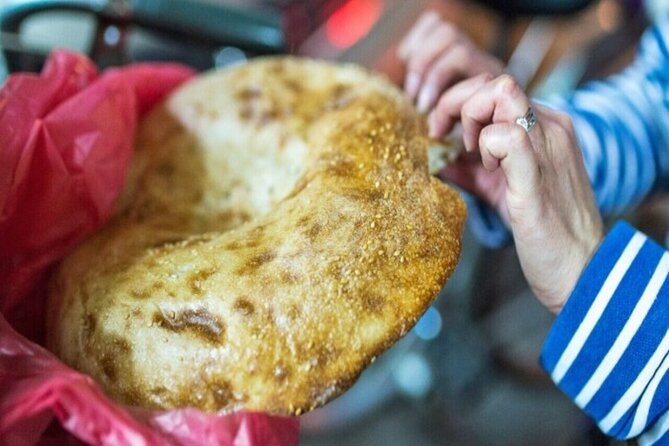
This is the kind of Dubai experience that makes more sense in a walking format. You spend time in older neighborhoods where the city still shows its original shapes, plus you get the classic market energy in the souks without trying to navigate everything solo.
The tour is priced at $115.83 per person for about 3 hours, which is not “cheap,” but it starts to look reasonable when you look at what is included: bottled water, a licensed guide, and multiple tastings of local dishes and drinks. You also get the practical value of not guessing which stalls to prioritize or how to approach bargaining.
If you are the type who likes to plan around food and then use that momentum to see places, this tour fits your style. If you are looking for a slow, gallery-like day with lots of free time to wander, you may feel the schedule is tight.
Where the tour starts in Al Fahidi, and how to get oriented fast
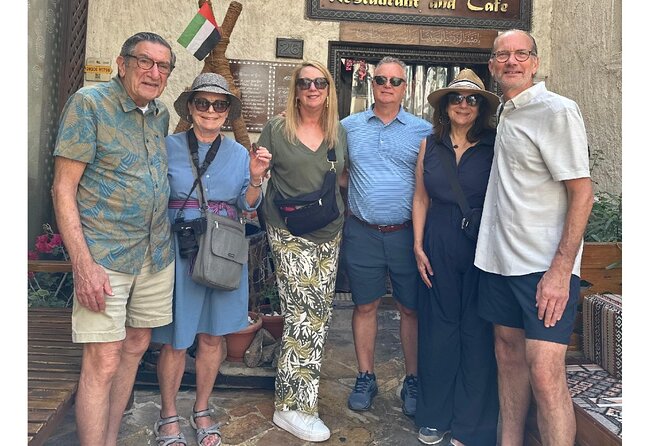
You meet at Arabian Tea House Restaurant & Cafe – Al Fahidi, Dubai, across from Musalla Post Office. It is a straightforward meeting point, and the tour is described as being near public transportation, so you are not stuck on a far-off pickup hunt.
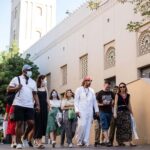
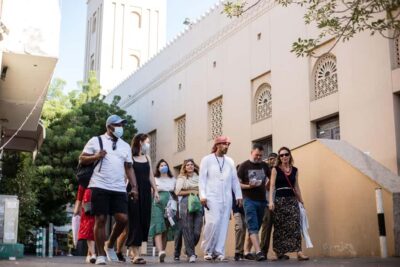
This starting location matters. Al Fahidi is where Dubai’s older fabric begins, so starting there helps you build context before you hit the souks and the creek. You begin on foot through streets and alleys that feel more like a neighborhood than a photo stop.
Al Fahidi Historical Neighbourhood and the wind towers
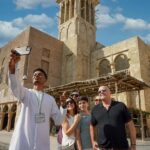
The first stop focuses on Al Fahidi Historical Neighbourhood, a district that reflects traditional life from the mid 19th century through the 1970s. What I like about this part is that you are not just looking at old buildings, you are learning why they were designed the way they were.
The star details are the Barjeel air towers and the traditional building materials, including stone, gypsum, teak, sandal wood, fronds, and palm wood. Even if you only catch a few of these details at close range, it helps you understand how people once managed comfort without modern equipment.
You also get time here to slow down and actually read the neighborhood layout, with buildings lined side by side and separated by alleys and public squares. That layout is one of the reasons old neighborhoods still feel walkable once you are inside them.
The oldest fortress-style building since the 1780s

The next segment highlights an older structure built as a fortress, standing since the 1780s, and tied to the old political center of the area. The value here is perspective: Dubai’s history is not just “new buildings and tall hotels.” Even in Old Dubai, the story includes defense, governance, and community life.
This stop also keeps the tour grounded before you shift from architectural context into temples and markets. It is a good reset point, especially because the route becomes more sensory as you move closer to the souks.
Shiva Temple, then Textile Souk: faith and fabrics in the same route
You then visit Shiva Temple, the Dubai Hindu Temple complex for the Hindu community in Dubai. The tour notes it was initially established in 1958 in Bur Dubai, with spaces including Shiva Mandir, Krishna Mandir, and Gurudwara. Even with limited time, it gives you a real-life snapshot of Dubai’s religious diversity.
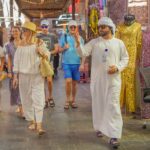
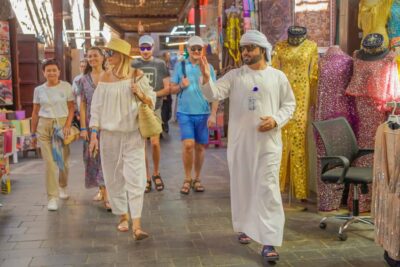
Right after, you step into the Textile Souk. This is where the tour becomes very practical for shopping. You get about 20 minutes here, and it is positioned as one of the oldest traditional markets in Dubai.
What you are meant to focus on: rainbow colors, textures, weaves, and embroidery. The market is also described as a good place to buy textile products, shawls, and souvenirs. The important advice is simple: bargain. If you keep the guide close during the stop, you can avoid the common mistake of paying “first quote” pricing.
Al Souk Al Kabir: a longer pause for art and tea shops
Next comes Al Souk Al Kabir, with about 1 hour of time. This part sits within the Al Fahidi Historical District area, lined by traditional stone houses. The tour description mentions modern art galleries, al fresco restaurants, and tea shops in courtyards.
I like that this stop is longer than the others, because it gives you a breather after the faster market hops. It also gives you a place to reset your senses before you hit the more smell-driven souks ahead.
- Dubai: Red Dune Safari, Quad Bike, Camel Ride, BBQ Dinner★ 4.9 · 32,185 reviews
- Dubai: Premium Safari, Camel Ride & Al Khayma Camp 3-Buffets★ 4.9 · 30,335 reviews
- Dubai: Burj Khalifa Sky Level 148, 124, & 125 Entry Ticket★ 4.6 · 23,827 reviews
- Dubai Red Dunes ATV, Camels, Stargazing & 5* BBQ Al Khayma Camp★ 5.0 · 21,620 reviews
- Dubai Marina: Luxury Yacht Tour with Breakfast or BBQ Option★ 4.7 · 21,528 reviews
Bur Dubai Abra Station and crossing Dubai Creek the traditional way
Then you get the abra moment. You stop at Bur Dubai Abra Station for a short ride across the creek to the Deira side. The tour notes that abra are traditional ferry boats and that crossing Dubai Creek is both affordable and authentic.
Why this is worth doing on a tour: the abra ride becomes a bridge between “Old Dubai streets” and “Old Dubai markets,” without you having to figure out routes. You also get food moments here. During the tour you try Iranian faluda, plus a refreshing juice and dates chocolate, which turns a short ferry hop into part of the tasting rhythm.
The crossing itself is short, but it changes how the day feels. You go from street-level alleys into a wider view of the creek, which helps you mentally map where things are.
Dubai Spice Souk: your sense of smell drives the bargaining
Next is Dubai Spice Souk, described as the oldest market of Dubai. The biggest clue is in the way it is described: once you reach the souk, the aroma fills the air.
You get about 20 minutes here, and the goal is twofold. First, learn how spices are presented and used in Middle Eastern cooking. Second, shop with confidence. The tour explicitly encourages bargaining, and it also mentions the guide helps you get the best rates.
If you want to buy spices, this is the part of the day you should take seriously. You are not trying to compare every single stall for an hour. You are using the guide’s time to hit the right zone and set a starting price based on local expectations.
Dubai Gold Souk: shopping for jewelry, with context instead of pressure
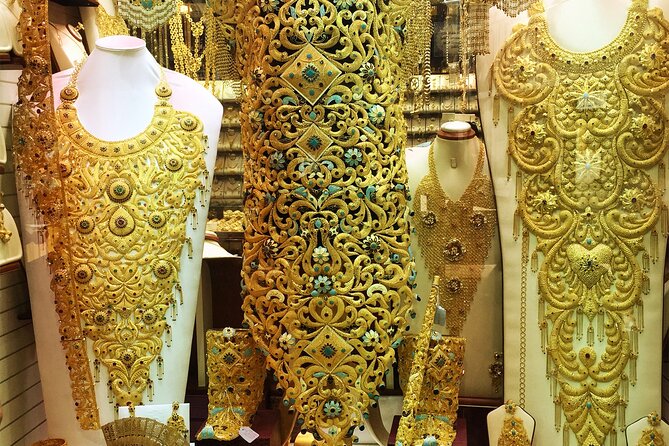
Then you move to Dubai Gold Souk, about 20 minutes. The tour description calls it one of the largest gold markets in the world, with enormous variety and exceptionally reasonable prices.
Even if you are not buying jewelry, I like that the stop gives you a sense of scale. You can see how Dubai became a global trading hub, and you can understand why the gold market is a must-see even for people who only want a look.
Keep your expectations balanced. This is not an educational workshop. It is a market walk, so you might see things quickly. If you want to shop, focus on your priorities before you step in so you do not get swept into comparing everything at once.
The food plan: what you actually get, and how to handle it
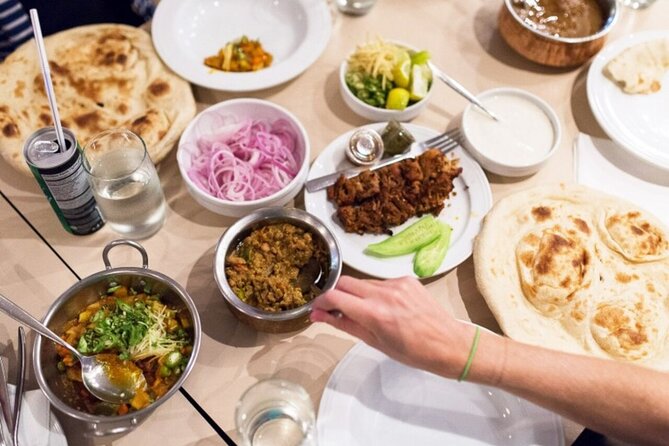
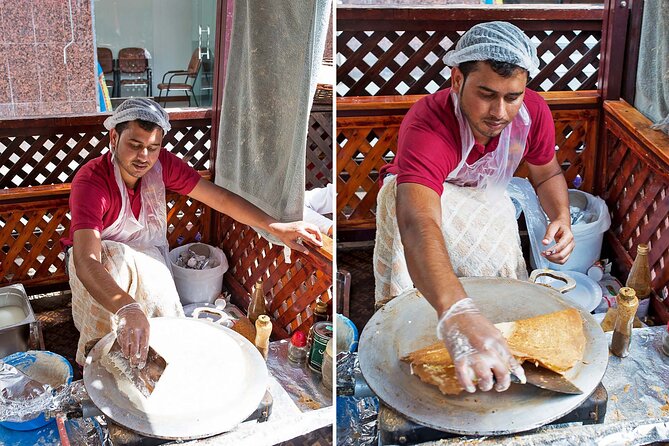
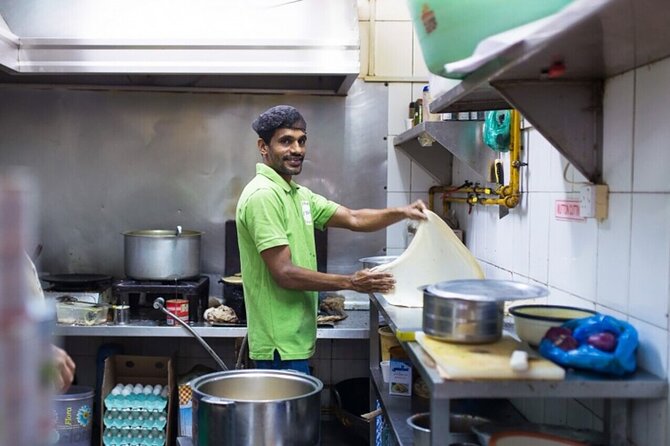
The tour name includes street food, and the inclusions reflect that. You get local street food, bottled water, and tastings of high-quality local products. The main listed dishes include:
- Shawarma
- Falafel
- Hummus
- Kunafa
- Chicken mandi or Madhbi
- Plus tea or drinks
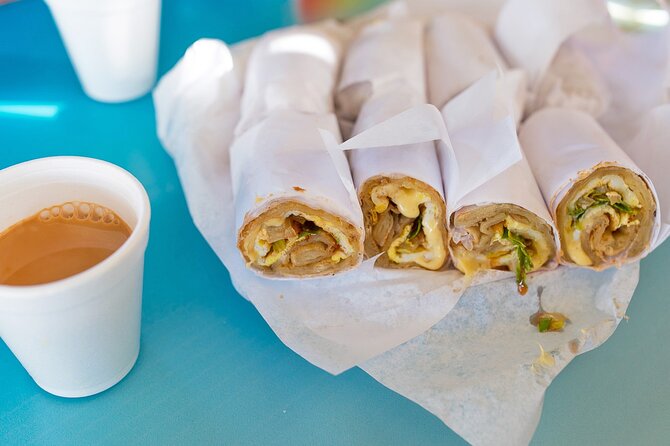
And the tour adds extra sweet and refreshment stops during the day: Arabic tea, Iranian faluda, a secret refreshing juice, and dates chocolate.
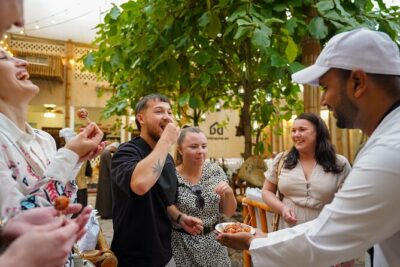
The best advice is what the guide and reviews strongly imply: come hungry. The structure gives you savory hits, then desserts and drinks, so if you arrive on a full stomach you may end up feeling stuffed before the best items even land.
For me, the value of the food inclusions is that you are sampling multiple food styles without having to order for yourself street by street. You also learn the difference between what feels like “one food” and what is actually several related dishes and sauces.
How the guide makes (or breaks) this kind of tour
The biggest repeatedly praised part of this experience is the guide performance. One guide named Mansoor is singled out for being informative about the country and the food, and for communicating clearly.
What that means for you on the ground:
- You get explanations tied to what you are seeing, not just random facts.
- You get practical shopping advice, including where to buy and how much to pay.
- You can ask questions without feeling rushed.
That matters because Old Dubai is not laid out like a museum map. It is a working neighborhood with markets. The guide becomes your translator, both for culture and for cost.
Price and value: is $115.83 worth it for 3 hours?
Let’s be honest. $115.83 per person is a mid-range price for a walking tour. What helps justify it is the bundle you get:
- a professional licensed guide
- bottled water
- multiple tastings of named dishes and drinks
- added food moments tied to the creek crossing
Also, you are not just walking. You are stopping at major places like Al Fahidi, Shiva Temple, and the souks, plus you get the abra ride. You save time on figuring out what order to see things and where to start.
So the value depends on your travel style:
- If you want a guided “best hits” route plus food, the pricing makes sense.
- If you already love DIY market browsing and you only want one or two foods, you may feel the tour is paying for convenience.
Who this tour is for, and who should skip it
This works best if you:
- want an intro to Dubai Old Town
- like street food tasting rather than one big meal
- enjoy markets but want help with bargaining and priorities
- want a structured route in about 3 hours
It may be less ideal if you:
- hate shopping pressure (even if the tour encourages bargaining)
- want a long sit-down break
- prefer deep time in one single site rather than several stops
Should you book this Dubai Old Town street food walking tour?
If you want a smart first look at Old Dubai, I think this is an easy yes. The tour gives you a focused walk from Al Fahidi to the creek and souks, with named food tastings that match the route you are taking.
Book it if you can handle eating in stages, because the day stacks savory, sweets, and drinks. Also book it if you like the idea of having a guide who can steer your shopping decisions, not just talk history.
Skip it only if you want maximum free time or you are not interested in markets at all. Otherwise, this is a very practical way to experience the city’s older side while still leaving with your stomach satisfied and your bearings set.
FAQ
How long is the Local Street Food and Guided Walking Tour of Dubai Old Town?
The tour lasts about 3 hours.
What food and drinks are included?
The tour includes local street food and tastings of items such as shawarma, kunafa, chicken mandi or madhbi, falafel, hummus, plus Arabic tea and other drinks. Bottled water is included too.
Where does the tour start and where does it end?
You start at Arabian Tea House Restaurant & Cafe in Al Fahidi, and you end at Al Ras Metro Station on Baniyas Rd in Deira (Al Ras).
Is there a boat ride during the tour?
Yes. You visit the Bur Dubai Abra Station and cross Dubai Creek by traditional abra ferry.
Is this a private tour?
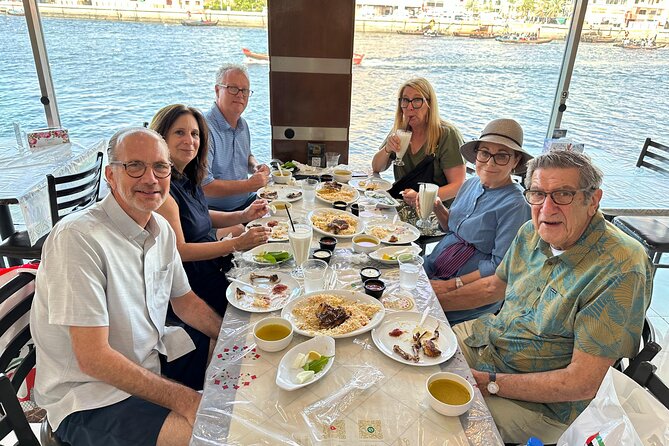
Yes. It is described as private, with only your group participating.
What is the cancellation policy?
You can cancel for a full refund if you cancel at least 24 hours before the experience’s start time. If you cancel within 24 hours, the amount paid is not refunded.
Emirati Tables We Sat Down At


More of Dubai, written up the same way




Emirati Food & Dining, compared.
 ★ 4.8Old Town, Creek, Museums, Souks, & Street Food TourFrom $1810,816 reviews
 ★ 4.9Old Town, Souks, Street Food, Guided Tour & Abra RideFrom $97,170 reviews
★ 5.0Old Town, Souks, Street Food, Guided Tour & Abra RideFrom $171,664 reviews
★ 4.9Old Town, Souks, Street Food, Guided Tour & Abra RideFrom $97,170 reviews
★ 5.0Old Town, Souks, Street Food, Guided Tour & Abra RideFrom $171,664 reviews
 ★ 4.9Old Town, Street Food, Creek, Souks, & Emirati HouseFrom $61,496 reviews
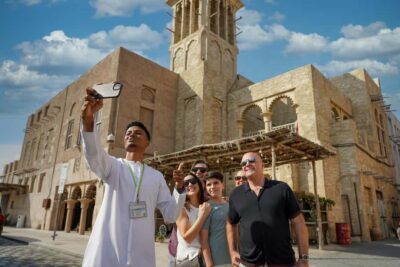 ★ 4.9Old Dubai: Premium Guided Tour with Street Food & Abra RideFrom $31416 reviews
 ★ 4.9Plato’s Afternoon Tea in Atlantis the PalmFrom $65389 reviews
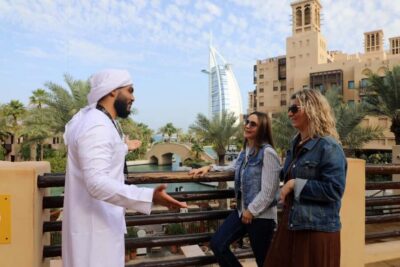 ★ 4.8Dubai Top Highlights: Frame Entry, Souks, Abra & Street FoodFrom $65344 reviews
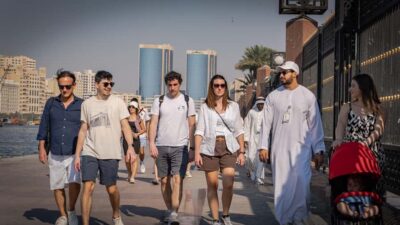 ★ 4.9Premium Old Town, Street Food, Souks & Boat Ride TourFrom $37262 reviews
Browse the lists this tour appears in