
REVIEW · DUBAI
Old Dubai Walking Tour with Local/souks, boat, and local tasting.
Dubai’s past hides in plain sight. This Old Dubai walk connects the creek-side heritage with classic souks, and you get a traditional abra crossing that makes the whole route feel like one continuous story. I especially like the stop at Al-Fahidi Historical Neighbourhood, where the mid-1800s style of life shows up in the high air-tower buildings (barajeel) and in the older materials used in the homes.
I also like the way the tour compresses multiple trades into one easy route, from the Textile Souk to the Spice Souk and then the Gold Souk, without turning it into a random shopping spree. The guide makes a difference too, and I’ve seen strong praise for guides like Mohammodo, Adnan, and Ikram for their energy and patience. One possible drawback: if you want heavy, site-by-site history, you may find the experience leans a bit more toward souk time than deep historical stops.
In This Review
- Key things to know before you go
- Why this 3-hour Old Dubai route works
- Stop 1: Al Seef shoreline walk, from pearl diving days to a modern heritage zone
- Stop 2: Al-Fahidi Historical Neighbourhood and the barajeel air towers
- Stop 3: Dubai Museum and Al Fahidi Fort, quick look at one of the oldest buildings
- Stop 4: Textile Souk, from early 1900s trading to today’s tourist pull
- Stop 5: Bur Dubai Abra Station, the classic creek crossing you can feel
- Stop 6: Dubai Spice Souk, trade started near dhow moorings around 1850
- Stop 7: Dubai Gold Souk, early 1900s origins and hundreds of retailers
- The role of the guide, and why the best ones make or break it
- Price and value: what $22.89 gets you in real terms
- Getting ready: comfort matters on a souk-and-creek walk
- Who should book this tour
- Should you book this Old Dubai walking tour?
- FAQ
- How long is the Old Dubai walking tour?
- Where does the tour start and end?
- What’s included besides walking?
- What stops are on the route?
- What is the price per person?
- How big is the group?
- Is it mostly admission-free at the stops?
- Is it suitable for most travelers?
Key things to know before you go
- Small group size (max 8) means easier questions and a calmer walk through busy areas
- 3 hours, multiple trades keeps you focused, textiles to spices to gold, then back across the creek
- Dubai Creek abra ride included for that classic Bur Dubai to Deira perspective
- Al Fahidi neighborhood highlights include barajeel air towers and traditional building materials
- Most admission is free on the included stops, so your budget stays predictable
Deeper into the old side of the creek
- Dubai: Old Town, Creek, Museums, Souks, & Street Food Tour
★ 4.8 · 10,816 reviews - Dubai: Old Town, Souks, Street Food, Guided Tour & Abra Ride
★ 4.9 · 7,170 reviews - Dubai: Frame Tickets, Creek, Souks & Blue Mosque Guided Tour
★ 4.8 · 5,980 reviews - Dubai Aladdin Tour: Souks, Creek, Old Dubai and Tastings
★ 5.0 · 3,755 reviews
Why this 3-hour Old Dubai route works
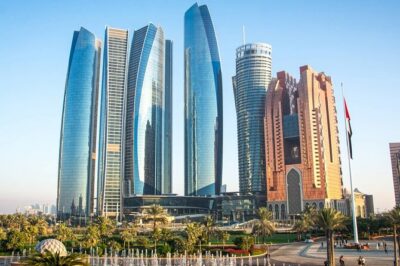
Old Dubai can feel like two different cities. You’ve got the sleek skyline that people come for, and then you’ve got neighborhoods where the creek, the trading, and the everyday living still set the pace. This tour gives you the second city on a simple timeline, with a local guide guiding you through the historical areas and the souks, then flipping you back to the other side of the creek by traditional boat.
The pacing is a real plus. At about 3 hours, you’re not stuck in transit all day, and each major stop gets enough time to look around and understand what you’re seeing. The group stays small too, with a maximum of 8 travelers, which helps if you want explanations without feeling rushed.
And because you start and end by metro stations, you can plug the tour into your day without needing a complicated plan. Start near Sharaf DG Metro Station (Exit 4) and end at Al Ras Metro Station.
Stop 1: Al Seef shoreline walk, from pearl diving days to a modern heritage zone
You begin at Souk Al Seef By Dubai Retail, a waterfront development that hugs Dubai Creek with 1.8 km of shoreline. It’s a long stretch, and the idea is split into two parts: a heritage area that keeps older architecture vibes close to the water, and a more contemporary zone.
What I like here is the framing. You’re told this area connects to Dubai Creek’s beginnings as a coastal pearl diving base, and that makes the rest of your walk click. Instead of treating the creek like scenery, you treat it like the engine that drove trade.
How much time you get: about 40 minutes. Admission for the stop is listed as free. Practical note: wear shoes you can walk in. This first segment sets the rhythm for the whole tour.
Stop 2: Al-Fahidi Historical Neighbourhood and the barajeel air towers
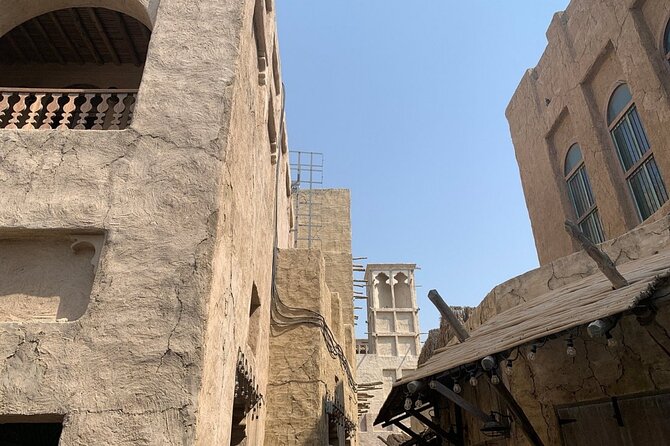
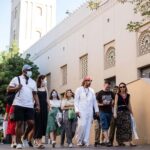
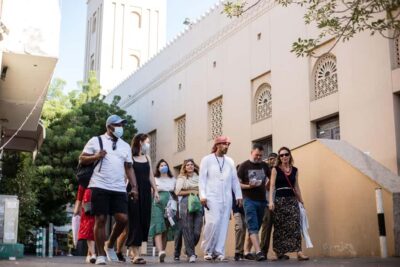
Then you head into Al-Fahidi Historical Neighbourhood, often called one of the best preserved windows into Dubai’s older residential style. The tour context is specific: it reflects how Dubai looked from the mid-19th century until the 1970s.
The visual you’ll remember is the barajeel, those tall air towers built to help cool buildings before modern air conditioning. The tour also points out traditional building materials mentioned in the area’s description: stone, gypsum, teak, sandal wood, fronds, and palm wood. Even if you’re not an architecture nerd, this stop gives you something concrete to look for.
You get about 30 minutes here, and admission is listed as free. The shortness matters. You can see the main character of the neighborhood, but you won’t get stranded hunting down every lane detail.
Stop 3: Dubai Museum and Al Fahidi Fort, quick look at one of the oldest buildings
Next is Dubai Museum & Al Fahidi Fort, set at the south side of Dubai Creek, near Al Souk Al Kabir. The fort itself dates to 1787, and it’s described as the oldest existing building in Dubai. It’s also noted for being close to the Ruler’s Court area.
This stop is short, listed at about 5 minutes. That’s a good thing and a not-so-good thing, depending on what you want. If you’re trying to understand Old Dubai in a single walking circuit, a quick fort snapshot keeps you moving. If you want lots of time inside museum spaces, you may want to plan extra time elsewhere later.
Stop 4: Textile Souk, from early 1900s trading to today’s tourist pull
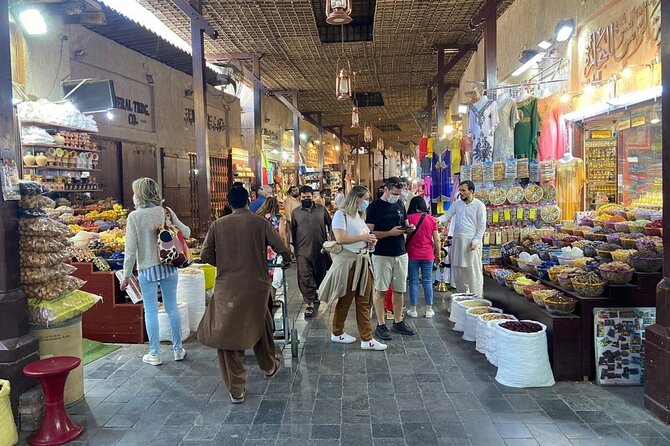
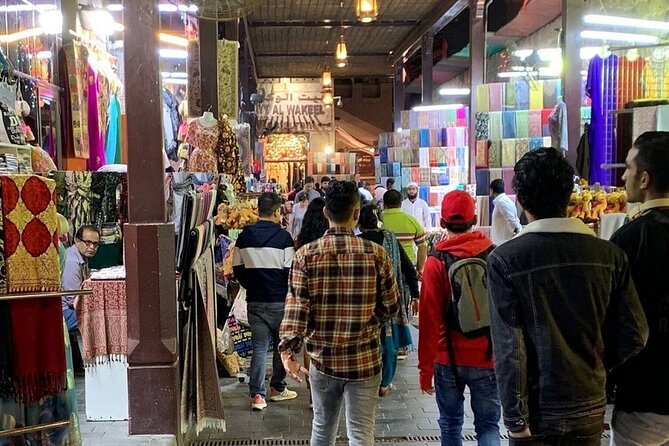
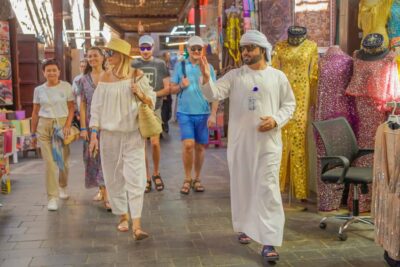
After the fort and museum area, you move into the Textile Souk. The key idea is that it used to be a commercial hub for the exchange of textiles for everyday clothing and special occasions. Over time, as Dubai’s global trade grew and changed, this souk’s role faded somewhat and it became more tourist-focused.
The souk is described as established in the early 1900s. With about 30 minutes on the stop, you’ll have time to understand what’s sold and how the market works, without getting stuck in the stuff-buying maze.
One practical tip: go in with eyes open. Souks are sensory, and they can tempt you into quick impulse buys. If you’re there for context, look at layout and signage first. Prices and quality can vary a lot by stall, so if shopping is your goal, plan to compare before you commit.
Stop 5: Bur Dubai Abra Station, the classic creek crossing you can feel
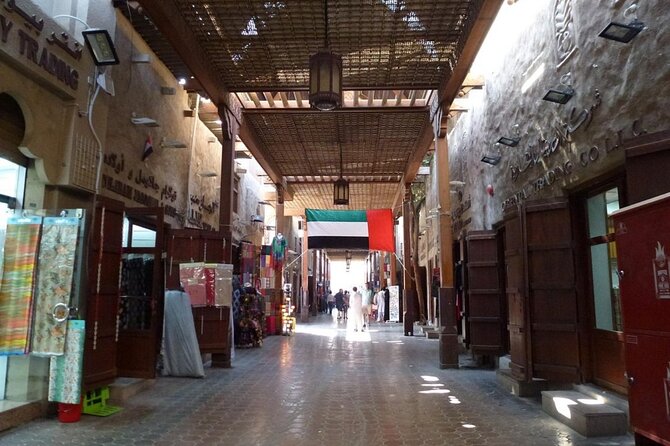
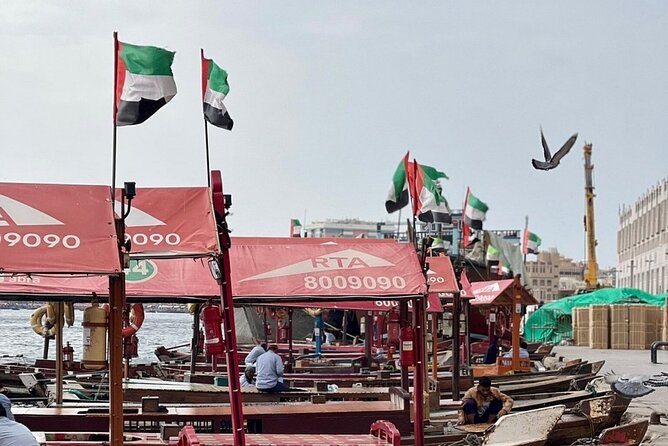
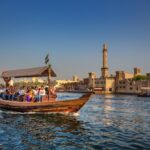
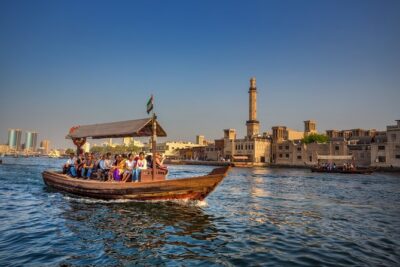
Then comes the part that turns this from a walk into a memory: the abra ride at Bur Dubai Abra Station. Abras are traditional boats that ferry people across the creek between Bur Dubai and Deira.
You get about 10 minutes for this crossing, with admission listed as free. Even though it’s brief, the value is high because the boat gives you a moving viewpoint. You see the creek from a different angle, and the contrast between banks makes the whole Old Dubai idea feel real, not just photographed.
If you like simple moments with big payoff, this is it.
- Dubai: Red Dune Safari, Quad Bike, Camel Ride, BBQ Dinner★ 4.9 · 32,185 reviews
- Dubai: Premium Safari, Camel Ride & Al Khayma Camp 3-Buffets★ 4.9 · 30,335 reviews
- Dubai: Burj Khalifa Sky Level 148, 124, & 125 Entry Ticket★ 4.6 · 23,827 reviews
- Dubai Red Dunes ATV, Camels, Stargazing & 5* BBQ Al Khayma Camp★ 5.0 · 21,620 reviews
- Dubai Marina: Luxury Yacht Tour with Breakfast or BBQ Option★ 4.7 · 21,528 reviews
Stop 6: Dubai Spice Souk, trade started near dhow moorings around 1850
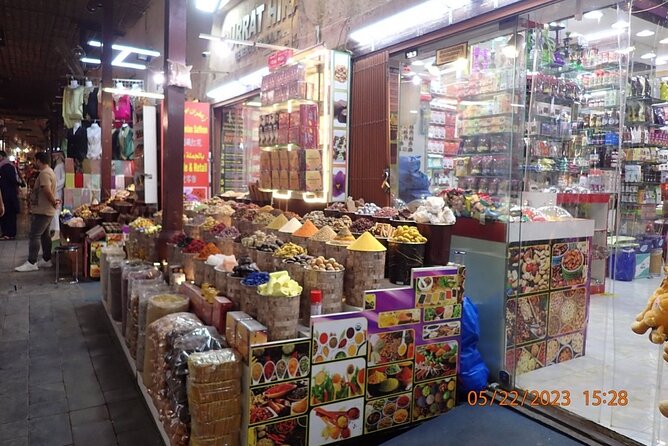
Next is the Spice Souk. The description puts its start around 1850, in the adjacent area of dhow moorings, so spices could be loaded efficiently for trade. The souk is described as built inside the larger bazaar more than 160 years ago, and it’s framed as a favored trade point for both residents and travelers.
You get about 30 minutes here. Admission is listed as free.
I like this stop because it isn’t just about smell, even though it is very much about smell. It’s also about the logic of trade routes. When you understand that proximity to moorings mattered, the whole market layout makes more sense.
Practical note: if you’re sensitive to strong scents, take your time and don’t feel pressured to step into every stall’s sampling area.
Stop 7: Dubai Gold Souk, early 1900s origins and hundreds of retailers
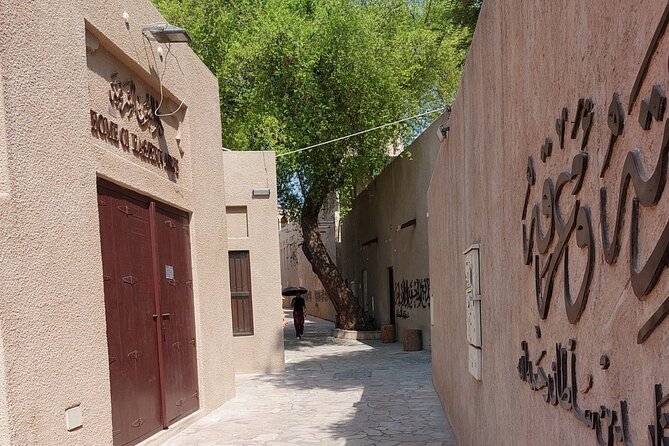
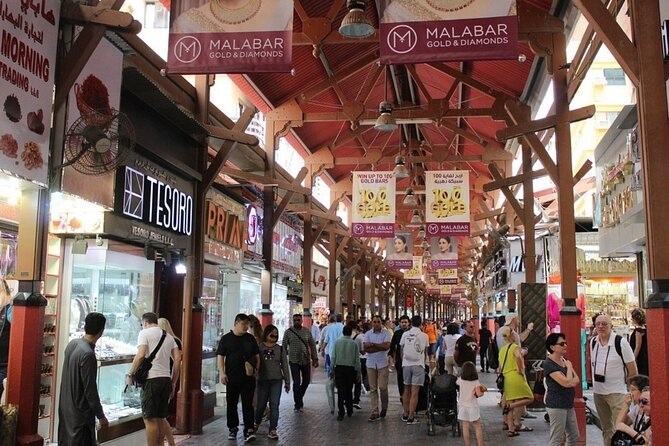
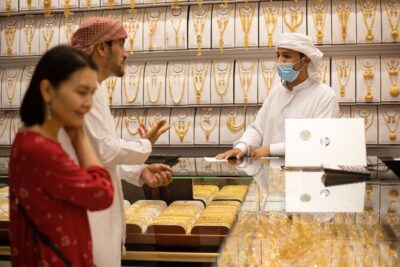
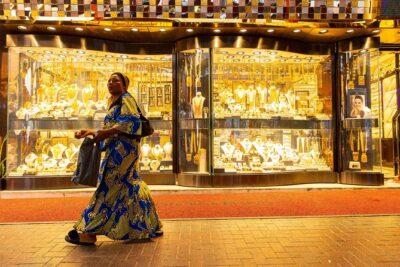
Finally, you end with the Gold Souk in Deira, in the Al Ras locality. The description says it has over 380 retailers, most of them jewelry traders. It’s also noted that gold trade here predates the modern UAE, with origins traced to the early 1900s.
You get about 35 minutes on this stop, and admission is listed as free.
This is where the tour shifts from trade logic to showroom energy. You’ll see how the market concentrates retail around a single product category, and you’ll feel why people come here even if they’re not buying. If shopping is part of your plan, treat this as the final checkpoint, not the first one. You’ll have a better sense of how the souks operate by now.
The role of the guide, and why the best ones make or break it
The guides are clearly a major reason people rate this so highly. You’ll see praise for Mohammodo for sharing history, culture, and Dubai’s future outlook with passion. You’ll also see strong notes about Adnan being familiar with old town Dubai and making up for small timing issues with a smooth, confident tone. And Ikram gets credit for being informative, patient, and helpful, which matters when you’re walking through tight streets and crowded market lanes.
Here’s how that translates to your experience. On a tour like this, you’re not just collecting photos. You’re trying to make sense of why a neighborhood looks the way it does, why a market exists where it exists, and why Dubai’s trade routes shaped the city’s layout. A good guide turns that into something you can remember.
If your guide is strong, the fort becomes more than a quick stop, the souks become more than shopping, and the abra ride becomes a perspective shift instead of a ride.
Price and value: what $22.89 gets you in real terms
At $22.89 per person, this is priced as a budget-friendly way to get a guided route through several major Old Dubai stops. What makes it good value is the combination: you’re not paying just for walking, you’re paying for context plus multiple market stops plus a traditional boat ride.
Also, many stops are listed as free admission on the schedule. That matters in Dubai, where standalone tickets can add up quickly if you’re not careful. Here, your money mostly goes toward the guide and the structure of the route.
One small reality check: this tour is about 3 hours, not a full Old Dubai day. If you want time for long museum interiors or deep shopping, you’ll likely pair it with additional self-exploring after the tour.
Getting ready: comfort matters on a souk-and-creek walk
You’re walking through historical neighborhoods and market areas, then crossing the creek. Bring comfortable shoes you can stay on for a few hours. The tour is listed as suitable for most travelers, but it still makes sense to plan for uneven sidewalks and dense market lanes.
Since the tour uses a mobile ticket, have your phone ready at the start. It’s also smart to show up a few minutes early. The meeting point is near metro stops, and you want to be lined up before the group moves.
Also, small group size helps you keep up, but it doesn’t remove crowds. Souks can be lively and you’ll likely be shoulder to shoulder at times, especially near high-traffic stalls.
Who should book this tour
This is a great fit if you want:
- A fast, guided way to connect Old Dubai neighborhoods to the working trades of the souks
- The abra crossing experience without searching for it on your own
- A small group pace that makes it easier to ask questions
It might be less perfect if:
- You want lots of time inside historical sites, not quick snapshots
- You’re expecting a tour that is mostly big-ticket historical monuments, instead of markets and daily-life trade spaces
There was at least one mixed note that the historical context felt light and the route leaned more toward the souks. If that’s your concern, just know you can still get value, but you might want to add extra time for the specific sites you care about most.
Should you book this Old Dubai walking tour?
Yes, I’d book it if you like your Dubai with texture. For the price, the route gives you a practical hit of the creek, the barajeel air-tower neighborhood feel, the fort area, and three major souks, then you cross the creek by abra so the whole story has a satisfying ending.
If you want history-heavy time, consider pairing this with extra independent time after the tour at the places that grab you most, like the Al Fahidi area or the fort museum zone. For most people, this tour hits the sweet spot, especially because it stays short, structured, and guide-driven.
FAQ
How long is the Old Dubai walking tour?
The tour lasts about 3 hours.
Where does the tour start and end?
It starts near Sharaf DG Metro Station (Exit 4) and ends at Al Ras Metro Station.
What’s included besides walking?
You’ll also take a traditional abra boat ride at Bur Dubai Abra Station across the Dubai Creek.
What stops are on the route?
The route includes Souk Al Seef, Al-Fahidi Historical Neighbourhood, Dubai Museum and Al Fahidi Fort, the Textile Souk, Bur Dubai Abra Station, the Dubai Spice Souk, and the Dubai Gold Souk.
What is the price per person?
The price is $22.89 per person.
How big is the group?
The tour has a maximum of 8 travelers.
Is it mostly admission-free at the stops?
Admission is listed as free for the stops included on the itinerary.
Is it suitable for most travelers?
The listing says most travelers can participate.
The Creek, the Souks, the Old Side



More of Dubai, written up the same way




Old Dubai, Creek & Souks, compared.
 ★ 4.8Old Town, Creek, Museums, Souks, & Street Food TourFrom $1810,816 reviews
 ★ 4.9Old Town, Souks, Street Food, Guided Tour & Abra RideFrom $97,170 reviews
 ★ 4.8Frame Tickets, Creek, Souks & Blue Mosque Guided TourFrom $495,980 reviews
 ★ 5.0Dubai Aladdin Tour: Souks, Creek, Old Dubai and TastingsFrom $213,755 reviews
 ★ 4.8Half-Day City Tour with Blue Mosque, Creek, and SouksFrom $493,059 reviews
 ★ 4.0Dubai Half-Day City Tour with Visit to Dubai Gold SoukFrom $161,741 reviews
★ 5.0Old Town, Souks, Street Food, Guided Tour & Abra RideFrom $171,664 reviews
★ 4.0Dubai Half-Day City Tour with Visit to Dubai Gold SoukFrom $161,741 reviews
★ 5.0Old Town, Souks, Street Food, Guided Tour & Abra RideFrom $171,664 reviews
 ★ 4.9Old Town, Street Food, Creek, Souks, & Emirati HouseFrom $61,496 reviews
Browse the lists this tour appears in